Birding Along the Susquehanna

Birding Along the Susquehanna
Written Spring of 2005

Did you ever try “birding”? Recently, on a beautiful spring Saturday, I packed a lunch and headed to Lancaster County to go birding.  My older brother Philip asked me to meander around the Susquehanna River in search of some birds on his “to see” list.  We hiked through nearby woods, but we also just sat, with nowhere to go and nowhere to be, waiting patiently for the next avian sighting.  Do you realize how spectacular a Baltimore oriole (often called the Eastern oriole) looks when the sun hits it? Its cousin, the Orchard oriole has a “show me” spirit as well.  But the high point of the day was watching a bald eagle feeding its young in a huge nest of branches high above us in an electricity tower.  It is exciting to see the return of the bald eagle to our region and we were even privileged enough to look through a fellow birdwatcher’s scope and see the yellow of the eagle’s eyes as it majestically surveyed all of us, turning its distinctive beak from side to side.  The bald eagle has an elegance and sophistication all its own.

But even more importantly, it meant a lot for me to be able to spend a day alone with my brother.  You see, I am the youngest of five and came along six years after my mother discarded all her baby clothes.  Philip is 12 years older than me and unfortunately I was only six when he left our home for 1-W service in Colorado.  I’ve known Philip all my life, but don’t remember ever being alone with him for any length of time.  So, it was kind of like getting to know an old friend in a more meaningful way.  It was worth the awkwardness that I think we both felt at first when we later realized how much we’d learned about each other.  That day of birding was a day of reconnecting with my brother and with the quiet and beauty all around us.  It was a special treat to find familiarity and common ground in the admiration of God’s gifts in nature.

Finding Joy and Purpose

Finding Joy and Purpose
Written Winter of 2004

I’m sitting here in first period Language Arts class at Indian Crest Junior High School.  All around me there are ninth grade students talking, trying to practice reading a Dr. Seuss book for their upcoming elementary school visit.  They seem glad to not have to concentrate  on vocabulary or Conrad Richter’s Light in the Forest.

All day long I’m around boisterous kids.  When I arrive home, my own children clamor for my attention during the evening news, competing with each other for assistance on their homework.  Sometimes I long for quiet.

But yesterday, I had my mother over to our house for supper.  She didn’t seem to notice two of my children firing questions, hopping on her lap, and pleading with her to choose which name, Heather or Trish, should belong to an unnamed doll.  Her patience never wavered.  She even seemed to enjoy it.

Mom later thanked me repeatedly for having her over for dinner.  She said it felt “good to eat with a family.”  Since my dad died in July, my mom has missed eating with someone.  But then, my dad’s loud, commanding, and entertaining voice would be easy to miss.  In the past few months, she has continued to tell us, “Merrill never gave me the silent treatment!”  I can clearly see that my dad’s absence has left a quiet, gaping hole in my mother’s life.

She made me realize as we grasped hands for a dinner prayer that quiet is nice, but having an active, vibrant family is priceless.  My mom helped me see myself in 30* years, longing for the days of noise and chaos, dirty feet and slobbery kisses, words of anger and words of love. It’s at times like these that I agree with Emily Webb from Thornton Wilder’s Our Town when she says, “Does any human being ever realize life while they live it?”

My prayer is that God will help you and me to find joy and purpose in this new year, no matter what our passage in life.–BBM

*Editorial note:  It took a lot less than 30 years to miss the noise and clamor of raising a family.  Try 7 or 8 years…

Beauty of Compliments

Beauty of Compliments
Written Spring of 2006

I heard on Oprah recently that if you want to improve your marriage, a good way is to tell your partner three things you appreciate about him or her every day.  This counselor said that he and his wife give each other three compliments, big or small, each night before they go to sleep. It could be as little as “I appreciated the way you cleared up the dishes tonight” or “I liked the color blue that you wore today.” This made me wonder how many other relationships could be improved if we focused more on the positive rather than the negative. Who knows, maybe even my relationship with my two teenage boys could improve with compliments.

I know that traditionally Mennonites have been more reticent and perhaps felt like complimenting others encouraged false pride, but I’m not sure that is biblically-based. In fact, it almost seems like Philippians 4:8 encourages such a positive, affirmative outlook on ourselves and others, when it says ” Whatever is true, whatever is noble, whatever is right, whatever is pure, whatever is lovely, whatever is admirable—if anything is excellent or praiseworthy—think about such things.” It’s just so much easier to think about negative characteristics of ourselves and others, isn’t it?

I think we all could use more compliments. Sincere compliments are preferable, but after some thought I realized that I may appreciate a compliment from my supervisor at work even if it wasn’t sincere. (I really have no objection to delusional thinking!) Hank Fox, a humorous freelance writer says, “The really weird thing about compliments is that they cost the giver not one red cent.  And yet they can be gold to the person getting them.  You’d think more people would make the very slight effort it takes to do it.  And yet it seems most people don’t.”

I don’t know about you, but sometimes I feel like I am fighting a daily battle of gratitude versus resentment. Henri Nouwen suggests, “Healing happens often by leading people to gratitude, for the world is full of resentment.” I believe that God encourages us by His love to continue to see the beauty and goodness in others…and perhaps three compliments a day is a good way to start!

Stories Passed Down

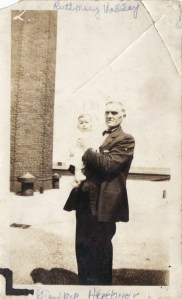
My great-grandfatther, Daniel Heebner, with one of his grandchildren.

Stories Passed Down from Generation to Generation
Written in Fall of 2003

When coming home from an evening program at Christopher Dock Mennonite High School, my dad would sometimes choose to cross the bridge on Cassell Road where my family believed the following events took place.  My dad (Merrill Benner) being very familiar with the story from my mother (Sara Heebner Benner) and her side of the family, would dramatically re-enact the events, complete with horse whinnies, screams, and the slitting noise of the penknife…all in our car, of course.  One time this got too intense for me and I dreamt about it that night.  But even after the childhood fears were gone, this sad story left an indelible impression on me.  My grandfather was Albert Heebner, father to Sara Heebner. This is a write-up from the time, believed to be written by Mrs Irvin (Eva) Kratz:

1898

Double Drowning Tragedy along the Skippack Creek

Shortly before noon on Sunday, May 15, there occurred a sad accident near the George Hartzel home when Daniel G. Heebner and family of four boys and one girl, Mary (the youngest child), and Allen, a son of Cyrus Clemmer of Hatfield, were on their way to visit Mrs. (Sallie) Heebner’s parents, Mr. and Mrs. Jacob S. Landes, a mile from the scene.

They started to cross the low plank bridge, which at the time was surrounded and covered with water to the depth of eighteen inches, due to a heavy rainfall on Sunday and the previous night. The height of the bridge was about four feet, and was often under water.  It had a railing on both sides, but the swollen stream had taken the right side railing with the tide.  The horse, a newly purchased animal, was leaning to the right near the edge of the bridge, and because of the waves on the left side, became frightened and unmanageable. He stepped down over the edge, dragging the wagon with him so that the one front wheel went down, too, plunging Mr. and Mrs. Heebner and the little girl headlong into the current.  Mr. Heebner caught hold of one wheel to save himself, grabbing around in the water for his wife and little girl, to no avail.  This was the last time the two persons were seen alive.  They were taken under the bridge with the stream.

Mr. Heebner stood wringing his hands when others came to rescue.  Horace, the oldest of the boys, quickly cut the cover of the back of the huckster wagon with his penknife, and with the help of the father, succeeded in wading across the water-covered bridge and walking to the home of the grandparents.  Jacob, the second oldest and eleven years of age, helped all but Albert, the five-year-old, from the water-filled vehicle.  Jacob dragged him to safety by one foot.  He had also grabbed Mary’s foot, he says, but being held too tightly by her Mother’s arm, she could not be saved.  Mary had been in the back seat chatting with her brothers during the journey, but within a short distance from the place of the accident, she became tired and begged to go sit on her Mother’s lap.  Mrs. Heebner is remembered to have responded, “Let Mary come up front.  She wants to see the water, too.”

After the accident, Mr. Heebner, a nearly frantic man, could not be persuaded to leave the site.  In the evening, at seven, when the rain receded, the search began for the bodies.  Mary was found, at nine PM. The search was kept up to a late hour, but the body of Mrs. Heebner was not found until Monday at one o’clock PM. The search had started early in the morning with boats and ropes spun across the stream.  Three hundred men were gathered.

Mrs. (Sara, referred to as Sallie Landes) Heebner’s age was 31 years, 6 months, 2 days.  Mary’s age was 2 years, 10 months, 27 days.  Burial was on Ascension Day, May 19, 1898 at the Plain Church (Plains Mennonite Church). Two thousand people witnessed and viewed the bodies.  The text of the funeral was Lamentations 1:12.

Let’s Laugh More

Let’s Laugh More
Written Winter of 2006

There is a “time to weep and a time to laugh” (Ecclesiastes 3:4) Let’s choose to laugh more and worry less in 2007!

If you’re like me it’s easy to feel “down in the dumps” during the gray, short days of winter. Vanessa, my 11-year old daughter, tells me (she heard it from a reliable source) I need to laugh every morning right after I get up.  Even if there is nothing funny, “you just make yourself laugh.” According to her, the whole day will go better if I laugh first. Well, I will attest to the fact that if my husband and I find something humorous in the early morning hours, the rest of the day does go immensely better.  But if we start ranting about money issues or why the dog has to track in mud, the day doesn’t go so well.

According to Mike Moore (2006 Self Improvement Online, Inc.) “laughter isn’t just fun, it’s good for us. Modern medicine is discovering more and more about the therapeutic dimension of humor and laughter and is encouraging us to add them to our wellness program. When we laugh we:

  • Alleviate depression
  • Lower our blood pressure
  • Promote relaxation
  • Reduce stress
  • Increase the oxygen level in our blood, giving us more energy
  • Increase the endorphin activity in our body resulting in a sense of well being
  • Are able to keep things in perspective
  • Banish boredom
  • Are more socially attractive – people enjoy being with those who laugh easily and often
  • Immeasurably increase our enjoyment of life

Laughter has been called social glue because it bonds us to the people we laugh with. The message is clear, to live better…laugh more. If it feels good to laugh then laugh to feel good.”

Reminiscing as Therapy

Reminiscing as Therapy
Written Winter of 2006

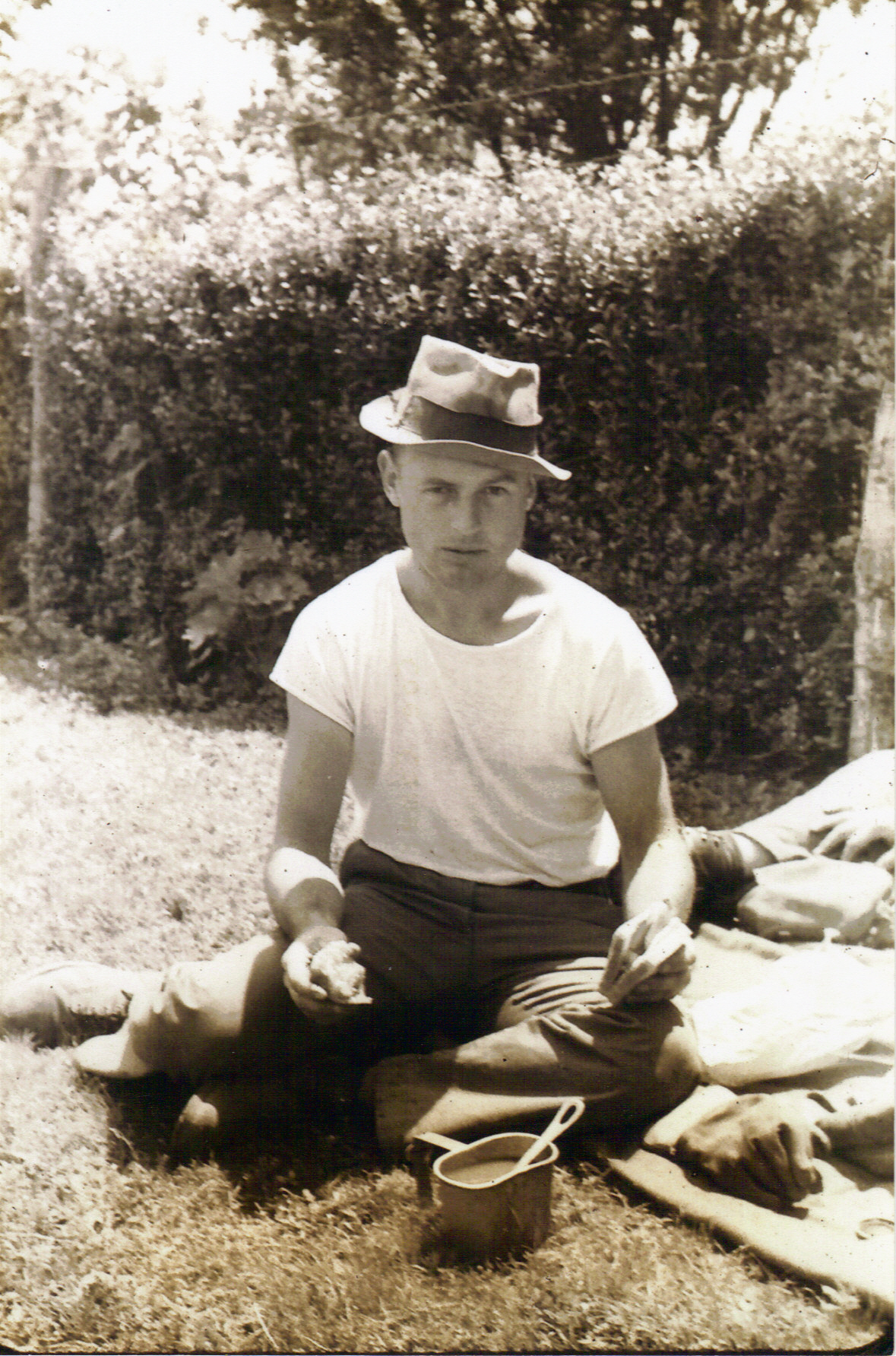
My dad often talked about his days in Civilian Public Service (CPS) during WWII.  His fondest memories were of the people he met and lived with in Grottoes,Virginia.  He used to quote persons that he got to know, including one man that politely asked, “Would you be so kind and condescending, so obliging and back bending as to extinguish your nocturnal illuminator?” when it obviously was time to sleep and turn out the lights. There was also the young man who asked my dad to wake him up in the middle of the night so he could enjoy going back to sleep again. That man really understood the luxury of sleep. My family got to know and love these persons that touched my dad’s life through his masterful storytelling. 

Now I realize that I grew closer to my dad when he reviewed his life and shared with us about the important persons and events in his life.  And I believe it was good for him, too.  In fact, Paula Tchirkow, President of Pittsburgh-based Allegheny Geriatric Consultants, says

“encouraging an older adult to reminisce is one of the easiest and most effective techniques you can use to boost their confidence and brighten their mood. The vivid connection to a time when your mother or father felt more alive, happier, successful, and useful reassures them that they weren’t always in their current physical and mental state.  Reminiscing helps elderly parents and relatives review past accomplishments and activities, thereby giving them a renewed sense of fulfillment about their life. Research shows that sparking these memories causes blood pressure and heart rates to drop, essentially producing a calming effect.

Although most people tend to focus on good memories, life cycle review can also help older family members become comfortable with the past.  That is, the technique gives elderly parents an opportunity to admit and accept the parts of their lives that didn’t go as well as expected.

Both the reckoning process, and the acknowledgement of happier times, clears up minor depression, reverses feelings of isolation, and helps parents get back into a rhythm of positive reinforcement that boosts physical and mental well being. To be sure, the benefits of storytelling and review are greatly underestimated.”

During the last years of my dad’s life, I would take my mom grocery shopping and then come back to their house and sit with my dad, encouraging him to talk about Grammy and Grandpop Benner, his uncle Warren who lived an adventurous life as a tramp, the huge buck that got away, and the men that kept him laughing in CPS.  Sometimes he felt too groggy from his battle with congestive heart failure to reminisce, but at other times his mind was sharper than a tack, entertaining me with engaging and captivating details. 

I know that sometimes one gets tired of the “same old stories” that the elderly seem to get stuck on, but for me, I’d love to be able to hear my dad talk again about the people and experiences of his life. Thankfully, these persons and events can live on if we take the time to truly listen.-BBM

Facing our Dragons

Facing our Dragons
Written Spring of 2008

I recently took on a long term substitute teaching position after not teaching for four years. Although I have a Master’s of Education degree, it’s been a struggle of facing my fears.   At times it feels like I’m slaying dragons within myself.  The first dragon I had to face was simply the courage to get up in front of a group of high school students each day and lead a class for 40 minutes, 5 times a day.  It took at least 3 weeks of over-adrenalized nerves till the practice became tolerable. Unfortunately, my health didn’t like the sleepless nights and I had to struggle additionally with a fever and bronchial cough.  The next dragon was the patience to teach kids that didn’t necessarily want to learn.  Patience is key in teaching and at times I have no extra levels to draw from.  Patience when you don’t feel able to concentrate on what you want to say because the classroom is too busy with noise.  Patience when you are spoken to in a degrading way. Patience when students seem to find it difficult to keep their eyes on their own test paper.  Patience when you really don’t want to see another teenager again…

But recently I found the verses in John 21: 18-19: Jesus said, “Feed my sheep. I tell you the truth, when you were younger you dressed yourself and went where you wanted; but when you are old you will stretch out your hands, and someone else will dress you and lead you where you do not want to go. Follow me!” 

I can attest to the fact that God is still in the business of leading us where we don’t want to go and stretching us in new ways that we don’t want to experience.  I only pray that in this stretching process I can truly grow in the ways of God and not resist his leading and teaching. How is God stretching you today?

Godly Imagination

Godly Imagination
Written Fall of 2007

My son, Patrick, recently left for college, but before he did, he wrote a long-winded justification for reading the Harry Potter series by J.K. Rowling.  He states, “the book series not only stirs the imagination, but instills the concept that people cannot be judged so easily and put into boxes to fit our needs. “

You see, I am probably to blame for his praise of the imagination since I’ve always tried to encourage that in my children.  I encouraged them to read and draw and act in order to experience real and fictional people and places.  But recently I came across a book titled, The Praying Life by Deborah Douglas that even encourages imagination as we seek God. “In the church….a preference for ‘right thinking’ can starve our minds and hearts of much of the richness of Scripture, poetry, and our own experience. We can refuse to believe that God can speak to us through our imaginations,” states Douglas. In this way we limit the “messages of God” because they don’t conform to what we see as plausible or rational.

“Fortunately,” she adds, “God is wonderfully inventive and patient with us, finding all sorts of creative ways to ‘steal past the watchful dragons’ that jealously guard our minds. Memories, dreams, intuition, prayer ‘too deep for words’—these gifts from God operate within us at a level far beyond conscious control or intellectual understanding.”

And thank God.  In recent months, I’ve found that prayer and listening for God’s voice has transformed my spiritual life.  We become immune to the work of angels all around us.  As Elizabeth Barrett Browning said, “Earth’s crammed with heaven, And every common bush afire with God; But only he who sees, takes off his shoes.”  Listen for God today because I’m sure he wants to speak to you!  –BBM

Surviving in Tough Economic Times

Surviving in Tough Economic Times
Written Winter of 2009

Today’s newspapers speak doom and gloom about the future of our US economy and many of us are facing difficult economic issues.  We wonder if we may lose our jobs or possibly our homes and fear for the future. If my dad (Merrill Benner) were still alive, he would tell me about the Great Depression and how this is nothing compared to what he had experienced.  In fact, recently I came across a glimpse into that time period from a story my dad had written in a grandparent’s memory book for my oldest son, Patrick.  My dad wanted his descendants to know what life was like during the Depression and how sometimes surviving included an abundance of ingenuity and thriftiness.

It was a cold, snowy Saturday morning during the Depression of the late 1920’s or early 1930’s, when the family of Charles and Leanna Benner, which consisted of Pop, Mom, Paul, Edwin, Marvin, Merrill, Irene, and Edna (later, Dorothy and Willard as well) experienced a rather unusual  occurrence.  We lived at 240 Chestnut Street and at the time, there was a two story barn near the family home.  We also owned the lot directly behind our property which was vacant and had on it a large pear tree.

During these Depression days, meat was a scarce item.  We ate lots of bean, potato, clam, and tomato soups. Many big families subsisted mainly on mush and milk, so we felt fortunate to have soup.  We sometimes raised leghorn hens, not for meat but to sell for much needed cash.  Pop and Mom felt the chickens were too expensive for us to eat, so during this time period we sold a flock of 35-50 hens for $1.oo each. 

On this particular day, hunting season was over (which was how we often supplemented our meager depression fare with rabbits, pheasants, and squirrels) and Pop decided to meet our need for good, fresh meat.  There was snow on the ground and the starlings were hungry and plentiful as they took a break on the pear tree in our back lot.  So Pop got his double-barreled shotgun and took careful aim from the upstairs barn window,  firing at least once into this flock of starlings perched on the big pear tree.  After the shot, Marvin, Paul and I helped gather the dead and wounded starlings.  We finished off the birds, which I remember tried to run away, but we caught them and filled up a peach basket full of starlings. Then we took them into the house, scalded them in a large tub, and picked the feathers off. They had nice meaty breasts and we each had one or more starlings for supper that evening. I think Mom cooked rice to eat with our birds, but more importantly, we were glad to have survived another cold wintry night and that our mom and pop and Father in heaven had supplied our needs. —BBM

Sunday Mornings as a Young Girl

Sunday Mornings as a Young Girl
Written Winter of 2011

I remember Sunday mornings as a child.  My dad was usually the time manager and tried desperately to get us all out in the car at “half-past” eight for a 9 o’clock service.  It started early in the morning by waking us up to the Mennonite Hour quartet blasted from our living room stereo. We often just grabbed an apple for breakfast and it sometimes seemed like a mad rush for all of us to get in the car, which would have included my older brother, Steve, and my sister, Linda.  But soon we were riding contentedly to church with many of us still munching on an apple.

My dad’s main goal in arriving early to church seemed to be to get a window seat on the left side of the sanctuary.  When we were successful, Daddy promptly put his Bible on the window sill and seemed to draw some unknown pleasure from this act.  Perhaps his father had done the same thing before him.  My dad used to say, “I held Beverly in church till I couldn’t see over her head.”  I guess I didn’t have any younger siblings to usurp my place on Daddy’s lap, so I continued till I was close to 13.  After all the lifesavers were used up (Mom didn’t let us chew gum in church because she said we “looked like cows chewing our cud”) and I still became “rutchy,” my dad would sometimes draw me a picture.  I’d like to say this picture was different each time he drew it, but actually it was the same picture with just moderate changes. He drew a tree stump in detail with wide roots and tree rings on the top.  He drew the surrounding area with distant trees and grass. I think I often added flowers to the scene.  But always in the center of the tree trunk was an ax and then the finishing touches were always the words, “Well done!”  At the time, I just enjoyed seeing a picture and thought my dad was an excellent artist, but I often was a bit perplexed as to the picture’s significance.  Why was the job well done and why the picture of a tree stump with an ax in it?  I think I asked him once and he replied with a smile and a nondescript answer “Well, it’s a job well done!” 

Looking back on it, I think it had something to do with looking towards heaven and a hope on my dad’s part that God would consider his work well done.  He loved being out in nature and it was something easy to draw that perhaps he had used in his chalk drawings that he had done in the 1950’s and 60’s.  It certainly was a picture that always rose to the surface when he sensed my boredom in church.  I don’t remember listening to the sermons in church because at that time I think the sermons felt way over my head.  But I suppose I did receive a message…. work hard and God will reward you.  I do hope my dad found the reward he strove for in heaven. -BBM