Not Returning Evil for Evil


Written Winter of 2011

Theodore Hughes lived a life filled with obstacles to overcome. His ancestors also overcame great obstacles.  His mother, Vertelle Ward Hughes, wrote down her memories before she died and from this we can determine some of Ted’s heritage. His great grandfather was a son of slaves in Virginia.  He escaped from slavery and came to McCain County, Pa.  In Pennsylvania, he married an Indian girl and they had five children.  These children were soon separated because of the fear that they could be kidnapped and sold into slavery.  One of these children, Charles, Ted’s grandfather was sent to a family in Canada.  There he was raised and later educated at Lincoln University.  He then received his BA in 1877 and entered the Theology Seminary, graduating in 1880 and was ordained as a Presbyterian minister.

Another one of Ted’s ancestors moved into a rich white family’s home in Oxford, Pa. This family was very much against slavery and worked with the Underground Railroad. Ted’s ancestor, a young African girl, was taken into their home, not as a slave, but in order to educate her. However, this white family had a son who fell in love with her. Marriage was out of the question and the child was given another last name to protect the identity of the wealthy, land owner father. This child was Josiah Davis and was given four acres of land near Lincoln University, Chester County, Pa.  He married an Indian girl, part of the Lenape tribe, and they lived on the property near Lincoln University. Josiah was Ted’s great, great grandfather. His granddaughter, Eleanor Angelina Davis (nicknamed Lamb), married Charles Ward when they met in Lincoln, Pa. After Eleanor graduated from Scotia Seminary in North Carolina and Charles graduated from Lincoln Seminary, they were married.

Ted lived in the shadows of his parent’s heritage and was raised by his grandmother as well as his mother. One memory Ted does have of his early years was of the time he was told to sit, but instead got up and ran into his grandmother who was removing a hot pan of bacon grease off the stove. The bacon grease slid down his head and he had such severe burns that his hair never grew back on that spot of his head. Ted remembers his head being wrapped up but does not remember any pain from the accident.  “I know I milked the situation, “admits Ted.  “Whenever I had to be punished, I would say, ‘Oh my head, my head.” Ted has always felt fortunate that the bacon grease did not run forward on his head and cause blindness.

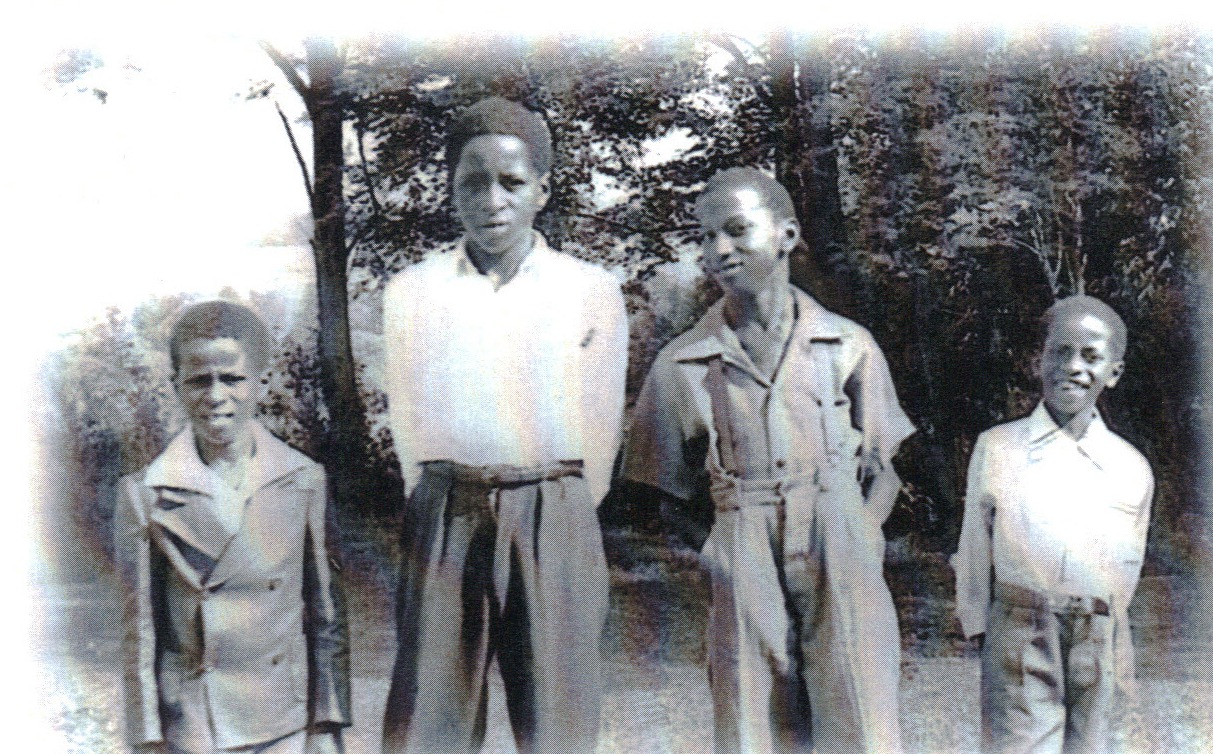
At the time of this incident, Ted was staying at his grandmother’s house in Lincoln, Pa, as he often did in the summer months.  But the remainder of the year he lived with his mother and father in South Philadelphia.  He does not remember much of this time period or his father because when he was seven, his parents got divorced.  His life changed drastically when his father moved away.  Ted is the fourth child of 5 born to his parents, but after the divorce, his mother, a dental technician, could not afford to take care of all 5 children.  She kept the oldest child of the family, a sister, Estella, but the 4 other boys went to the Thompson’s home in Andrew’s Bridge, Pa. Their home was close to his grandmother’s home in Lincoln and it was through her that contact was made to the Thompson’s. They were to stay for just the summer, but stayed until they were grown. Ted recalls that the home had no electricity or indoor plumbing and that life was full of activity. As the boys got older they worked on neighboring farms. Ted recalls, “We were very poor.  We even saved cardboard to stick in our shoes when they got worn out.”

Among the four brothers was Frederick, Ted’s oldest brother who was born with cerebral palsy.  His mother and grandmother were an active part of the boy’s lives despite not living with them and they both visited the boys often while they were living with the Thompson’s.  When it was suggested that Frederick be put in an institution, “Grandma said she would never put him in an institution as long as she lived.”  Ted recalls how “meanness in us brought out independence in him. He couldn’t talk, couldn’t read and could barely walk but he had a job selling Grit newspaper.  And people never took advantage of him.” Frederick had a unique language that only his family understood.

The Thompson home was one of the largest homes in the community and the pastors at Mellinger’s Mennonite Church at that time were part of an outreach to this black community in Andrew’s Bridge. He held a Sunday morning service at the Thompson home and this is how Ted was introduced to the Mennonites. In fact, all 4 boys were baptized into the Mennonite church at the Thompson home mission church.  Two of Ted’s brothers wore the plain suit (Mennonite attire of the 1960s that was cut straight with a Nehru collar), but Ted refused to wear it. At one point, he was told that he couldn’t lead singing unless he wore the plain suit, so he stopped leading singing. 

There was one bicycle for the three boys and no car, so they walked everywhere.  After high school, Ted started attending Monterey Mennonite Church with a friend who had a car.  There weren’t many young people in the area, so the ones that were around seemed to attend at Monterey and were involved in varied youth activities. Ted and his friend attended a Christmas program at Monterey and Ted encouraged his friend to ask out a young girl in the choir named Lina Yoder. 

Lina was one of a family of 10 children who had moved from Belleville, Pa.  Her dad, Levi Yoder, wanted to live in Lancaster County and had heard of someone who needed a farmer there.  After Ted’s friend broke up with Lina, Ted started dating her. “Lina and I started doing things together. Our families were friends until they realized that our relationship was more than just a friendship.  Suddenly, Lina’s family’s feelings took a U turn.”

Lina and Ted attended church together, but this attention of a young black man dating a white woman brought out feelings of racial prejudice in the church and the community. “They had a church meeting to decide if we could get married.” Finally, it was decided that the minister would marry them in the Monterey Mennonite Church and in 1961, Ted and Lina were married.  No one attended except the minister and another couple.  Lina’s family was very much against the marriage, so Lina and Ted started their marriage pilgrimage trying to ignore racial prejudice and instead praying for those who mistreated them.  Lina says, “If I was invited to a place and he wasn’t, I didn’t go.” 

On their honeymoon, they went to Niagara Falls, Canada.  They both remember people staring at their wedding rings in amazement.  They also recall a hotel with vacancy signs but when they went in and talked to the owner, he told them there were no rooms available. So Ted and Lina left and found a room elsewhere.  It was a guiding principle in their young marriage that they would “not return evil for evil.” Over the years they received hate mail but never honored the letters with a response. Ted and Lina believe they were the “first interracial couple to walk down the streets of Lancaster city holding hands.”

By this time, Ted was working at Provident Bookstore in Lancaster.  He had worked on the farm in Andrew’s Bridge until a man asked him if he’d like a job at Provident in the shipping department. At that time Provident was the largest office furniture dealer in the area.  Soon his job changed and he worked in the music department and eventually this job moved them to the Souderton Provident Bookstore.  While still living in Lancaster, Ted and Lina were blessed with a baby girl named Nancy.  After that Lina was told she couldn’t get pregnant again and they adopted Curt. Ten months later, Dave was born.  A year later they decided to adopt another child and named her Mary Beth. 

Relations with their families eased over the years and both sides began to see the beauty in Ted and Lina’s marriage.  Ted’s mom, Vertelle, who “did not like white people,” learned to really appreciate Lina.  Vertelle admired Lina’s strong determination as a woman and her advice as a nurse. Ted, too, in his interaction with the white communities of Lancaster and later Souderton made many friends and became known for his exuberance for life and his love of music.  One person admitted to Ted the feelings of perhaps many when he said, “My grandfather never liked black people until he met you.”
A Character Building Life


Written Summer of 2009

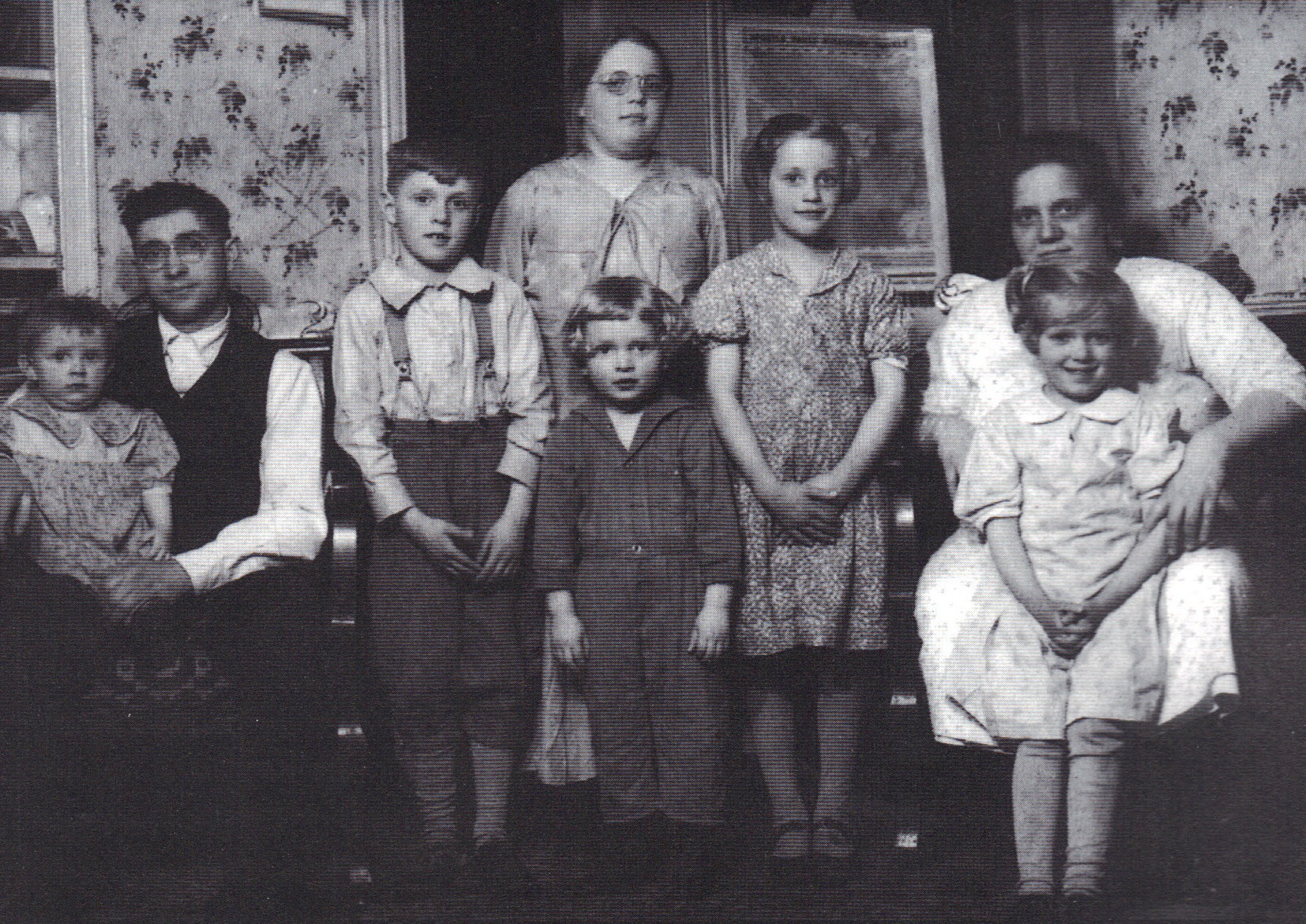
Mary Histand Reinford is a strong woman but she may have gained her strength from hardships she experienced throughout her life.  Mary was born in Doylestown Township on July 21, 1932 and grew up in the Doylestown Mennonite Church as the fourth child of Daniel and Nora Huddle Histand.  Her parents had a total of 11 children before her mother, Nora, passed away at the young age of 44.  Since she was one of the oldest girls, she took over the kitchen and cared for all of her younger siblings. 

She remembers that the year before her mother died she was told by her father that she could attend Lancaster Mennonite School (LMS) as her sister had.  Her trunk was packed but Mary refused to go, mainly because she knew she would get too homesick.  So her father said since she didn’t want to go to LMS, she would stay home and help her mother.  This was a hard decision for Mary to take, but she believes today that God knew her family would need her, because during that school year was when her mother died of a sudden heart attack. 

After her mother died, the children didn’t feel like they could talk about her, but Mary and her sisters found solace in their bedroom where they poured out their hearts to each other.  Her father soon married her aunt, a widow from Lancaster, and Mary was “farmed out” at the young age of 16 to work for Eastern Mennonite Homes (EMH) because “you can’t have 2 women in the kitchen.”  When their aunt came to live with them, her father chose a different bedroom for him and his new wife and the girls got to stay in their mother’s bedroom where she had died.  It was there that they talked quietly about their mother and found comfort in each other.

At EMH, she was the only teenager among many older persons speaking Pennsylvania Dutch. She felt very alone that summer and wanted to go home, but when “I called home, my father said, ‘if you come home, you’ll get a good lickin’ and then go back again.’ ” So she decided to stay, but cried herself to sleep each night for 3 months. 

Finally, her father told her she could go to Eastern Mennonite School (EMS) in the fall of 1949 to finish her education.  This time she went willingly with no objections or fears of getting homesick.  “I wanted to learn and I loved being the hostess at meals.”  The lively Mary blossomed at EMS and when everyone gathered for meals in the cafeteria, she was appointed hostess along with a male student as host to keep the conversation flowing around the table.

During the summers in between high school years, her father got her a job at the Pearl S. Buck Welcome House as a cook.  She cooked the meals and helped attend to the Amerasian children that stayed at the welcome house.  The host couple, a Yoder family from Zion Mennonite broadened her Mennonite perspective and she has remained close to the family ever since. “Because I gave all my earned income to my father till I was 21, Mrs. Yoder was the one who bought me luggage and a few items of clothing.” She spent two summers working there for Pearl S. Buck and got to know the famous author well enough to “take coats” at her personal parties. 

When Mary was 21 and she had graduated from EMS, she decided to do a short term of voluntary service in Rittman, Ohio with a friend, Ruth Gross.  She remembers the long trip to Ohio by train on January 1st and how the train was filled with service men returning after the holidays.  Her friend, Ruth, got homesick and returned home early, but Mary completed her 3 month term and returned home alone by train. 

She worked at a laundry in Doylestown for awhile till she realized she wanted to go to college.  She took her GED and made plans to attend Eastern Mennonite College.  But in 1955, she also met a handsome man from Skippack Mennonite Church that had been told there were nice women “on the other side of the Cowpath” and was driving around scoping out this area near Doylestown.  Ernie talked to her brother Herb who told Ernie, “I’ll bring her to Young People’s Meeting on Sunday evening at Souderton Mennonite Church and you can take her home.” They dated after that, but when Mary discussed her plans to attend EMC in the fall, Ernie said, “I’m not driving 8 hours down there.”  So, she had a change of plans and they were married in 1956.

Through the years Mary has had some times when she doubted this decision to not pursue her education.  She thinks she would have been a psychology or social work major because she enjoys working with people and helping others through their problems.  In 1978, Mary started working at Grand View Hospital as a nurse’s aide and enjoyed that job for 21 years. Mary says “I love people. If they are a stranger, they can become an acquaintance and then maybe a friend.”

Today, she has been married 53 years with 5 children: 2 boys, 3 girls, and 9 grandchildren. If she has regrets about her past, she doesn’t show it.  She has weathered many struggles over the years, but she firmly believes, “everyone is special and a potential child of God …and arms are made for hugging!”

A Life of Miracles

Fall of 2011

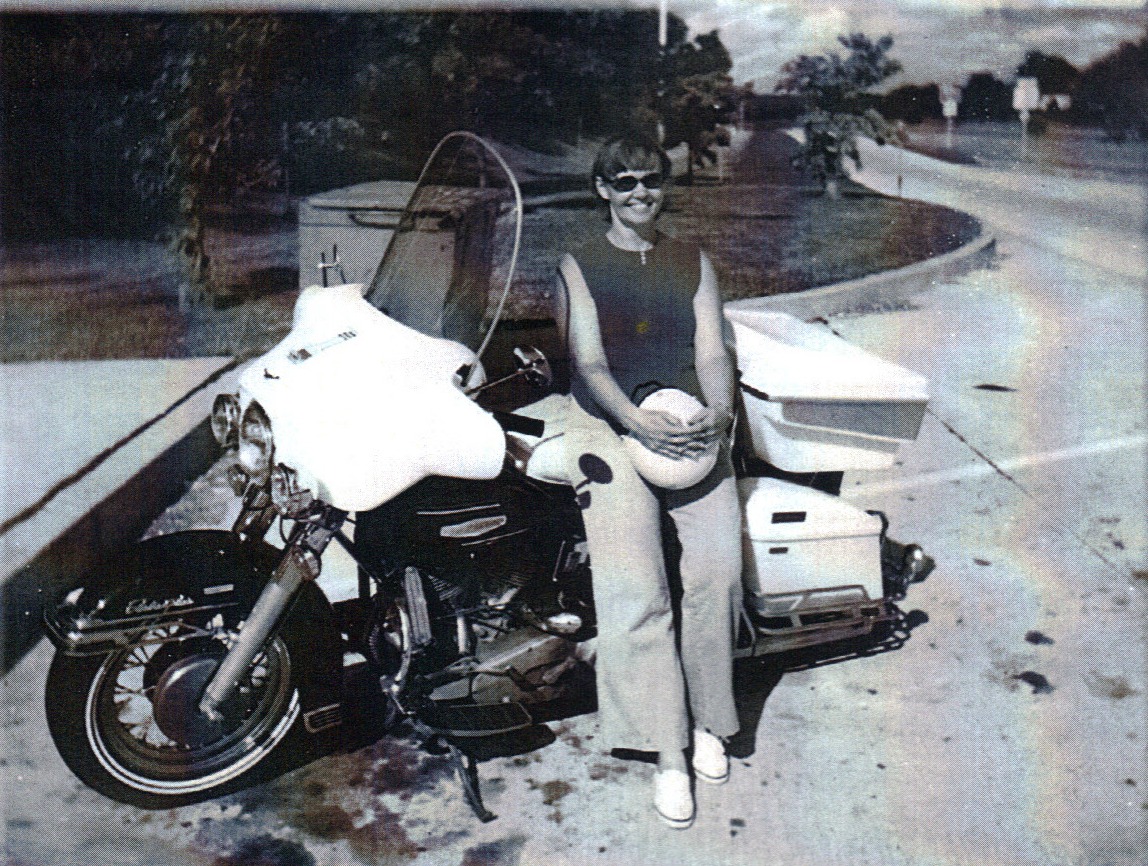
“Will you love me if I only have one leg?” Thelma Willouer called. She was bleeding profusely and her leg was hanging only by a small muscle when she asked her husband Howard these words.  They had just been thrown off a motorcycle and at first they hadn’t realized how serious the situation was. Howard quickly came to Thelma’s side, looking at her leg in disbelief.  Then suddenly from nowhere there appeared a young serviceman by Thelma’s side. He told Thelma he had been trained as a medic and tied a tight tourniquet around her leg in an effort to control the bleeding.  Thelma still claims this unknown man with the tourniquet must have been an angel or her first husband making a supernatural appearance in order to help her.

Thelma Walton Douglas Willouer was born on April 3, 1930 in Indianapolis, Indiana, but raised in the town of Remington.  When she was 3, her mother left the family which included her newborn brother, Gene.  So they all moved in with Thelma’s grandparents and their grandmother helped raise her and her brother.  When Thelma was 6 she came down with black diphtheria and thought she was going to die.  Her grandmother was the one to nurse her back to health. When Thelma was in 4th grade, her brother wanted a dog, but since Grandma was a meticulous cleaner, she wouldn’t allow it.  Gene cried and cried until finally their dad decided to move out on their own… with the dog.  So at 10 years of age, Thelma started taking care of the household, which included watching after her younger brother. 

In high school, she got very sick again, this time with scarlet fever, but again she miraculously recovered.  She soon fell in love with a guy she had known since 1st grade, Cary Douglas.  Cary and Thelma graduated in May 1948 and were married in Sept 1948. By 1960, Thelma had 5 children and was having hip problems.  After hip surgery, Cary wanted to take on another job to cover the costs of the hospital bill.  But after only a few days of driving a forklift at a loading dock, Thelma received the stunning news that her husband Cary had been killed when he accidentally drove off the edge of the dock.  

Many family members stepped in to help Thelma at this time of need.  Her dad moved in to help full-time and her mother also moved in for a short time.  Soon after this, Thelma had a brief marriage in the early sixties which took her to Lansdale, Pa.  In 1964 after experiencing a rough marriage and divorce, she went to dinner at Trainer’s in Quakertown and met Howard Willouer.  Howard had just returned that day from the Army, where he had spent time in Panama.  The first words she uttered to Howard as he walked past her were, “You’d look a lot better without that mustache.” 

Believe it or not, Howard seemed drawn to this outspoken woman and asked her to dance later that evening.  They met in May of 1965 and were married in November of 1965. Thelma’s first formal introduction to Mennonites was when she met Howard’s parents, Howard M. and Maggie L. (Moyer) Willouer, former members of Salford Mennonite Church. Howard’s parents took a liking to Thelma and she later learned that his parents were “thrilled to death when [they] got married.”  Howard explains, “I used to drink a lot, so [my parents] thought it would straighten me out.”

“Things were rough at first,” says Thelma of her early days with 5 kids and a new husband.  But before they knew it, the children were growing up and moving away from home.  Soon they found themselves with more free time to do things like motorcycle trips together.

 In 1977, Thema and Howard were planning a vacation in Alabama and driving their cycle back from Paoli from a pre-trip tune-up.  They were talking about their trip as they traveled together that day, when suddenly a car turned right in front of them and the car bumper hit Thelma’s leg.  They both were sent flying off the cycle and soon Thelma realized the bottom part of her leg was only dangling from a tiny muscle. As she lay there, she remembers thinking about Totie Fields and how she had survived having her leg being removed due to diabetes.  Soon she was rushed to the hospital and the doctors tried to pump her with blood and reattach her leg.  They had to reconnect major arteries, make skin grafts to replace missing skin, and try to bring back a leg that had lost all sensation. She was in the intensive care unit for 5 days and Thelma was told she’d never walk.  But, Thelma says, “The Lord had a hand on me and it was what saved me.”  Howard adds, “The accident woke us both up.  Before that, we were both Christians but mostly backsliders.”

Thelma had many surgeries and close calls while in the hospital.  At one point she went into shock after her third surgery and the family thought they were going to lose her, but she had another blood transfusion and slowly recovered.  But the biggest miracle occurred when the doctor noticed that she could move her knee on her injured leg.  He showed the other doctors in amazement and they started Thelma on therapy to recover the use of her leg.  Howard said, “She was in the hospital so long (10 weeks) that everybody had fallen in love with her and cried when she left.”

Soon after she came home, she began working again at Greene Tweed in Lansdale as a key punch operator and worked for 14 years after the accident.  In 2004, while attending the funeral of Howard’s uncle, Leroy, the Willouers heard Gerry Clemmer preach for the first time.  They were so impressed that Thelma said to Howard, “You used to be a Mennonite; let’s try it out.”  They have been attending at Souderton Mennonite Church ever since.

Thelma has had some more complications in recent years with her back, due to her legs being uneven and wearing special shoes, but she still attends church with the help of a cane and makes all the meals at home.  Thelma doesn’t deny that her life has been full of miracles, admitting to being like “a cat with 9 lives.  So often people thought I was going to die.”  Luckily for all of us, this generous and kind-hearted woman is still alive today.

Life Revolves Around Christopher Dock

Written Spring of 2012

When I was born, Souderton Mennonite Church met at Christopher Dock Mennonite High School for our Sunday morning services because our church building was being renovated.  My mom recalls that because there was no nursery, she would have to go out in the car to quiet and feed me when I cried during the service.

As a young girl, I went fishing on the pond at Dock along with my dad and my brother.  I was too young, and perhaps the wrong gender, to have a fishing rod, but I found a stick and attached some fishing line to drop over the pond’s edge and catch a 7-inch bass. My dad was shocked, especially since he and Steve hadn’t had any success.  From then on my dad let me use a fishing rod.

I learned to love the arts at Dock.  Some of my earliest memories are of coming and going to CD music and drama programs. When my sister Linda was in the junior play To Kill a Mockingbird as Mrs. Merriweather, I was eight years old and the television set was not yet prominent in our home.  I sat enthralled at the Dock performances; so much so, that my “movie stars” became the junior play’s main characters, such as, Jane Wenger as Scout and Yvonne Meyers as Christy.  Being entertained at the CD programs was a highlight for me as a young girl and I lived for the next event.

It also didn’t feel like Christmas if our family didn’t make the short drive to Christopher Dock to hear their seasonal choir and instrumental programs.  We left early to attend these programs to “get a good seat” but often ended up in the balcony because it was a Mennonite hot spot.  At a young age, I learned to appreciate four part harmony from masterfully trained choirs. At Christmas time it was always a special treat to hear Eleanor Ruth and the CD faculty quartet sing “The Star.”

When I began attending Dock in 1975, I was drawn to the drama and music that was offered. I remember Ms. Beth Ranck selecting me to portray Helen Keller in the Miracle Worker and instructing me to spend a day at school blindfolded so I could experience what it felt like to be blind. Being a part of dramas was like a childhood dream come true and I thoroughly enjoyed the camaraderie involved with a large group of people working and performing together. Through Mr. Gerald Benner, Steinbeck’s Grapes of Wrath came alive and with the assistance of Ms. Lois Driver, I entered my first writing contest and I began to see the power and catharsis of the written word. It was through these teachers’ encouragement that I majored in English after graduating from Dock in 1979.

When I finished college, I naturally wanted to return to the nurturing place of my youth and relive the joys of being part of the CD community. Unfortunately, teaching at Dock was much more difficult than any of my previous experiences. But with the passing of years, the faces of the student body, faculty and administration continue to change and it’s hard to stay bitter about a place that has nurtured me all my life.

In 2003, our oldest child began attending at Dock and when our daughter graduates in 2014, it will be eleven years of watching our children grow spiritually, watching them challenged by social and service opportunities, and watching them develop emotional maturity at Dock. They reflect the traditions and values of their Mennonite heritage and the Mennonite community that raised them.

I realize that for me and perhaps for many Mennonites in the Franconia Conference, we rallied around our high school that was founded in the 1950s and named after a local schoolmaster, but more importantly, our lives were forever changed and continue to be intertwined with Christopher Dock Mennonite High School. — BBM

Also published in part at http://www.dockhs.org/files/Publications/Lamplighter/Summer%202012/Lamplighter_Summer_12_web.pdf

The Emotionally Destructive Relationship

Compiled  and Written Spring of 2012

What makes a woman commit suicide at 36 with young children, a beautiful home, and a husband that provides for the family? 

Emotional abuse could be the reason.

What makes a man leave his wife of 30 years because he can no longer stand to be in her presence? 

Emotional abuse could be the reason.

How does one recognize an  emotionally destructive relationship? Answer these questions:

(From The Emotionally Destructive Relationship By Leslie Vernick)

1. Does the person use physical force or threats of force to make you do something you don’t want to do or to keep you from doing something you want to do?

2. Does the person use verbal weapons such as cursing, name calling, degrading comments, constant criticism, or blaming to get you to do something you don’t want to do or to keep you from doing something you want to do?

3. Does the person curse at you, call you names, humiliate you in public, or degrade you when he or she is unhappy with something you do?

4. Does the person force or manipulate you to perform sexually in ways you do not want to?

5. Do you ever feel afraid of the person?

6. Does the person yell, scream, curse, or hurt you physically when he or she is frustrated or angry?

7. Does the person threaten to alienate your children from you or use them to intimidate you into giving in to what he or she wants?

8. Are you afraid to disagree with the person?

9. When you share your thoughts and feelings about something important to you, does the person ignore you, make fun of you, or dismiss you?

10. Are you verbally and/or physically abusive toward the person?

11. Does the person always think he or she is right to the point of arguing with you until you concede or give up?

12. Does the person make most of your decisions for you?

13. Does the person control the family money, giving you little or no say?

14. Have you given up things that were important to you because the person pressured you?

15. Does the person pout or withdraw from you for extended periods of time when he or she is angry or upset with you?

16. When you ask for a time out or don’t want to talk about something anymore, does the person keep badgering you to engage?

17. Does the person lie to you?

18. Have you observed the person lying to others?

19. Does the person tell you something didn’t happen when you know it did?

20. Does the person question or challenge your certainty of what he or she said or did?

21. Does the person depend on you to meet all his or her needs?

22. Do you feel more like a child than an adult in the relationship?

23. Are you emotionally devastated when the person is upset with you or doesn’t want to be in relationship with you?

24. When you try to talk with the person about your feelings or something that’s bothering you, do you end up feeling like the trouble is entirely your fault?

25. When the person does something wrong, does he or she blame you or anyone else for it?

26. Does the other person make excuses for his or her behavior (anger, jealousy, lies)?

27. Do you feel loved and cared for in the relationship?

28. Can you safely express an opinion that is different from the person’s?

29. Does the person show interest in you and your needs?

30. Are you able to express your honest thoughts and feelings with the person?

31. When the person does something wrong, does he or she admit it and take responsibility for it?

If you answered any question up through question 25 with anything other than never, you are likely in an unhealthy relationship. Questions 27–31 describe the basic elements of a healthy relationship.  If you answered never or seldom to any of these questions, your answers indicate that your relationship is unhealthy and probably destructive. If answering this questionnaire has revealed to you that you are in an abusive relationship, please seek appropriate help from those in your church or community who are experts in helping victims of abusive relationships.

Mom


Written Dec of 1979

Her face lined with age,

creases in love

Her body quickens to answer my beckoning call.

Her squeezing hug and songlike voice

dissolve all my fears

Her ruling rod

brings pain and burning tears

but directs my wandering steps.

Poetry of Spring

Written Spring of 2004

Something about spring and poetry go together.  When I recently had a day off from work in early March, I hung out laundry, something I hadn’t done in months.  There was a welcome, but unusual smell in the air.  It was faint, but definitely, unmistakably spring.  Yet over by the line of trees there was still a lingering reminder of winter, persistently visible:  a border of snow. It was a day between winter and spring, but oh how invigorating, how awe-inspiring, how poetic.

Life seems too full of many “promises to keep,” yet hopefully we still have time to marvel at the green shoots pushing up underneath the brown, winter-laden foliage.  I hope we never cease to be amazed at the sight of the first daffodil, preceded by the first robin coming “down the walk.”  The green resurrection around us encompasses our celebration of Christ’s resurrection.  May we bear witness to this resurrection power and grace as we live and breathe the poetry of spring.

Can you name the poetry or poets briefly quoted above?  Let me know…

Getaway to Chicago

Written Spring of 2012

This past winter when I thought I couldn’t stand it any longer, I decided to get away and visit my girlfriend, Peggy, in Chicago.  Since I had invited myself, I told her I would get a room at a local bed and breakfast for a few days and see her whenever she could fit me in her schedule.  The thinking was that I would have time to work as well as see Peggy.  Well, Peggy was usually ready to do something soon after all her kids left for school, so we took one day to see the sites in downtown Chicago including the highly polished kidney bean called Cloud Gate and took another day to pick up Peggy’s daughter at nearby Trinity University.  We ate lunch every day together, trying a variety of ethnic restaurants and saw all the local Oak Park museums, from Frank Lloyd Wright to Ernest Hemingway.

I stayed at an old Victorian B&B hosted by Gloria, a kindred spirit.  Over breakfast we listened to each other’s writing adventures and we soaked in each other’s reassurances.  Gloria was the one to tell me how she confidently wrote a play and had it produced at a nearby theater.  She told no one about it….because she said, “Everyone will try to talk you out of it.”  She just went to her special “saint room” and wrote and it was as if it was blessed by Saint Joseph himself.  She had her family of grandchildren as her actors and she was the narrator.  It was produced one night to a standing room only crowd. For some reason, this woman was like ambrosia to my soul.  She was an energetic, warm host and I wished I could stay longer under her tutelage.

Another added benefit of this trip was getting to know Peggy’s family better.  We were the only female attendants at each other’s weddings, but the demands of our children and family had sequestered our friendship for many years.  We still sent the obligatory Christmas cards, but we had very little contact and lost touch with each other’s daily personal struggles that often keep friends bound together.  So on this trip I got to talk to and spend some time with her oldest twins, Jessica and Amanda, and her son, Ryan, her husband Jon, and even their guide dog, Hunt.  It wasn’t enough time, but it did provide a glimpse into Peggy’s life that I thoroughly enjoyed.  How we have changed since our college days…how we have grown and matured and in some cases, become hardened to life’s cruel twists.  How wonderful to reconnect and witness first-hand the daily joys and sorrows that make up Peggy’s life.

Working at McDonald’s

Written Fall of 1980

“Nobody can do it like McDonald’s can, “ but then who would want to?

Feelings such as these come to mind when I think of this past summer.  I was employed at McDonald’s of Souderton.  I begged for more hours and higher pay, but hated every minute I spent there.  Well, maybe that is a little strong.  Let’s say, on the average, every other minute.

My hours regularly ran from eleven AM to seven PM, Monday through Saturday.  I spent my early mornings in dread of the approaching eleven o’clock hour.  Luckily, by the time Phil Donahue was in its last commercial break, I had usually succeeded in pasting on my plastic smile and psyching myself up for another day at the “grease pit.”  Then I quickly stomped on my Ford Torino gas pedal and did not look back till I reached the golden arches.

With a pleasant appearance and a boiling interior, I pushed the 6-3 combination of the Employees Only door.  Due to the fact that I never wanted to arrive a minute too early, I usually had to punch in immediately.  Then I politely asked the nearest manager the familiar question, “Where am I today?’

If I was lucky, I got to be on a register to pant the orders given, in less than one minute’s time.  But if I was unlucky, I had to do the breakfast dishes and then go out in the lobby to empty trash, clean windows and tables, fill napkins and straws, and sweep and mop the floor.  Either way I was a goner.  This is one of the many times when the question, “Why am I here” arose in my mind.

On an ordinary day I worked register or drive-thru over lunch hour and then on grill during the slow afternoon hours.  I enjoyed working on grill by myself though everyone else despised it.  True, you did sweat profusely, running from buzzer to buzzer, turning the quarter pounders, searing the hamburgers, and dressing the filet-of-fish.  It was no easy job, especially when there was a rush and the hamburgers are burning, the pie buzzer is going off, and you realize you forgot to put the filet buns in the steamer.  It can be disastrous if at this crucial moment, with your face wet with sweat, a person on register bellows the unforgivable words, “I’m down six cheeseburgers.”

This is a fatal phrase in all McDonald’s.  It means that a customer has given an order but the product requested is not in the heated bin ready to sell.  This causes the grill team to drop all the more hamburgers and rip all the more buns.

But at least back on grill no grouchy customers can yell at you because their quarter pounder with cheese is too rare, that there is not enough hot fudge on their sundae, or that you charged them too much for their medium coke (to which you courteously point out that three cents tax is added).

I found the greatest number of complaints to come between the hour of four and five.  This is when groups of elderly women with pinched lips and pinched purses would order a plain filet-of-fish and a regular size cup of coffee.  Then they would immediately flash their “Golden Arches” membership card.  (This is a card given to senior citizens which entitles them to a free cup of coffee.) They then stared at the register till finally the all-telling digits appeared.  If I happened to forget to subtract their cup of coffee, they would make it known with an indignant shake of the finger.  One lady even stood at the counter for over five minutes, insisting that I had charged her two cents extra and demanding that I add it up again.  At moments like these my plastic smile grew rudely artificial.

The crew of workers surrounding me was not always easy to get along with either. I became an oddball because I was about the only one who did not join the beer and pot parties every weekend.  Due to this and also my failure to swear, I was often chosen to perform such tasks as taking the trash out or cleaning the bathroom.  Fortunately, as I continued to be faithful to McDonald’s, the managers began treating me with respect and even once advanced me to the position of “Crewperson of the Month.”

I soon learned the rule that all the workers, even the managers, followed, “How to do as little as possible and still get away with it.” Guilt often pricked my conscience when I kneeled behind boxes in the stockroom to shove “Chocolately Chip Cookies” in my mouth, when I took a ten-minute break instead of the required thirty minute, or when I sat in the bathroom filing my nails.  But it was ironic how everyone seemed to be doing it.  The managers were unpredictable—you never knew which way to turn.  At one time a manager would say, “Relax, take a walk around the parking lot” but at another time, “If you got time to lean, you got time to clean.  Hop to it, Benner!” The only time when everyone was working as hard as possible and the managers were prodding us for better QSC (Quality, Service, Cleanliness) was when the supervisor made his monthly visits.

Now that I look back on it, I feel no antagonism towards McDonald’s, only pity for the slaves caught up in its system.

See also 1979 McDonald’s commercial at http://www.youtube.com/watch?v=znPdjWAcPHQ

You are My Beloved

Written Summer of 2005

“You are my beloved.” I heard a powerful sermon recently on these words.  The pastor was referring to Jesus baptism in Luke 3 where the Spirit descended on Christ like a dove and there came a voice from heaven, saying, “You are my beloved, with you I am well pleased.” These consoling words changed Jesus life forever.  He was probably searching like all of us, for who he is and what he is supposed to do, and then all of a sudden he hears these words of affirmation and confirmation.  Suddenly, Jesus knows who he is.  He discovers his identity, his vocation, and his calling.

Some of us feel like we’re searching for that affirmation, identity, and calling in life.  We need to remember Jesus’ baptism and the strength and understanding he received in this joyful acceptance from his heavenly father and hear the message for each of us as well. We are truly and unconditionally, “God’s beloved.”  We too often listen to the voice of the world that tells us we are not good enough, not measuring up, not ….but instead we need to feel God’s validation and hear his words calling us, “beloved.”

For me, these words carry with them some responsibility.  Henry Nouwen encourages us to live out “a spirituality of love, of belovedness, the life of the beloved.”  I believe that means loving and serving everyone, whether they are the poor people of New Orleans, the “enemies” of Iraq, or the criminals on death row.  We can only be people that build each other up if we feel the affirming words of God, “You are my beloved,” and then recognize others as also beloved sisters and brothers.–BBM