Earliest Memories


Earliest Memories
Written Spring of 2012

I spent a lot of time alone as a child.  I remember playing in the sandbox at Halteman Road alone imagining friends that were with me.  I remember sitting with my mom at the table (on County Lind Rd) after everyone else left for school and it was just mom and me.  She used to take a mid-morning coffee break and I wanted to try coffee as well. She let me try it this time with lots of milk and sugar amidst decrees of how it would stunt my growth, wasn’t good for me, and other warnings.   I thought it tasted good.  I had just come in from playing on the swings in the backyard and it was a lovely day.

I remember the time (at County Line Road) when I went out to the garden to pick something for my mom and it was so windy it almost blew me over.  I stood and held my arms out for the winds to cease as Jesus did on the boat with his disciples.  The winds did calm and I felt my connection to God.

I remember playing with play dough at a really young age in the classroom (across from the women’s bathroom) at Souderton Mennonite Church, learning how to make snakes and cherry pies.

I remember sitting in the center of the downstairs at church singing before SS class began. The floors sloped down but we all sang as the piano played, probably by Nancy Moyer.  We sang out of the red songbook—This is my Father’s World and Now Thank we all our God

I remember when I was very little Steve took me for a bike ride on the back of his bike.  He told me to hold my legs out but I must have tired of this and suddenly my foot was caught in the bicycle chain.  I cried—it hurt!  Daddy came running and took my foot out.  It looked strange.  The skin hung open and you could see blood but it did not rise past the surface of the skin.  There was much crying and mass confusion but Daddy put a used plastic bag around my foot with a rubber band around my ankle.  I can still see it now.  Then my parents took me to Dr Warner in Kulpsville and he clamped my ankle shut, no stitches, but 4- 5 clamps that had to be eventually taken off.  I still carry the scar of this eventful bike ride.

I remember lunches with my mom before I started school.  I ate gravy bread as if it were the best thing there ever was.  I never did like cold sandwiches, but remember fondly my mom’s white bread with last night’s gravy.  

I can remember being with my cousins that played with Steve, like Alan and John Styer and they were fascinated that I had an imaginary friend named Pabey.  So I gave them a piece of my life by telling them, “Quiet! Pabey’s talking.”  Pabey in later years had a wife Seta and child Cocoa.  My siblings remembered the names of this invisible family that seemed very real to me.  I remember we walked among the flower beds together, discussing life’s mysteries.

I have a very young memory of my mom ironing and I was playing on the floor at our County Line Road house.  The house in my memory looks different but it is an early morning and I have the comfort of my mom right there with me.  She is commenting on what I’m doing and shining her love on me.

I also remember (and it may have been about the same time) that I was playing on the steps and Mom was in the kitchen cleaning, listening to the radio when suddenly she screamed, turned toward me as if I’d understand and said, “The President was shot!”  I stopped playing with my dolls on the steps and just stared at her. I didn’t understand…but her fear was palpable.  I was upset and didn’t even know why.  Later, when I got older and people talked about where they were when President Kennedy was shot, I knew where I was….but how could I remember this? I was only 2 years old in 1963.  I can only imagine that her fear was so unusual that I remember it today.

Most Meaningful Time

The Most Meaningful Time of Life
Written Spring of 2010

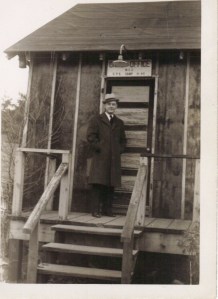
My father struggled with finding the right job for his skills. In his lifetime he had at least 17 jobs but never seemed to find his professional niche. But there was one time in his life where he shone brightly. This was when he was called to go into Civilian Public Service at age 24.

His life broadened when he left for CPS. The country was at war, and these years seemed to draw in Daddy a newfound strength and courage. He dealt well with the crisis mode of the time, went to his Mennonite bishop, John Lapp, and told him he wanted to be classified as a conscientious objector when he was called by the draft board. So John wrote a letter to the draft board, most likely the Lansdale, Pa., draft board, confirming Daddy’s decision. Soon, Daddy was called to Grottoes, Va., the former Civilian Conservation Corps camp where many in Franconia Conference began their CPS tenure.

I have heard many heartwarming stories of men Daddy met in Grottoes and later Bowie and Clear Spring, Md., but above all, I believe, Daddy experienced a spiritual awakening and a personal epiphany like none he had ever experienced. I believe he was nurtured and entrusted with responsibility and a strong faith in God to overcome some of the ways he was put down as a child. He laughed with the other men, worked hard and experienced life to the fullest. He also witnessed other denominations in the camp and in that way was exposed to people and other faiths outside the small confines of his Mennonite community.
It was a whole new world to have a Peace Committee formed by the Mennonite Church and to present its ideas for an alternative service option to the President of the United States. There was a lot at stake, and the Franconia Conference believed in their young men, supporting them financially, emotionally and spiritually, believing that in this time of great pain around the world, their young men were making a difference. It was a strong statement made by the peace churches: Mennonite, Brethren in Christ, and Friends. They went up against the powers that be that told them they needed to fight against an enemy as in World War I and said we need an alternative for our peace-abiding young men.

This had a profound impact on my dad, who was the sixth boy in the family. He had a determined cry as a newborn, which led him to be slapped across the face for wanting to be nursed so often. He looked bad enough that he could not be taken to church that week. He was named Charles Merrill, after his dad, in hopes that that might bring about a girl in the family. As was typical of the time, Daddy never heard that he was loved by his parents. His mother seemed to prefer his mild-mannered brother, who shared his feelings more readily than Daddy, who was by nature more emotionally distant. His dad taught Daddy to hunt and spent many days with him pursuing grouse, squirrel and pheasant. He taught him to trap muskrats in order to sell their skins, but apparently he rarely laughed or expressed much affirmation. Many in that day believed that to praise your children would create in them a false pride, which could damage their faith.

But during CPS, John Mosemann took a personal interest in Daddy and had him lead worship with chalk talks and found ways to encourage and pull out Daddy’s gifts. Daddy was artistic and saw the beauty in God’s creation. He also had organizational skills and could type, which helped him earn an office job while serving in Clear Spring. The men had nightly Bible studies that challenged them and helped them experience God’s calling in their lives. They were called to serve in this time as a witness of God’s redeeming presence and felt the importance of it.

In a file that my dad kept while in CPS of all the incoming and outgoing CPS “boys,” one campmate wrote: “During my time at camp, I learned to know God better. I know I’ve benefited by it greatly spiritually. I had more time to think on and study His Word than if I had never entered CPS. I also think this life has given me a chance to prove my faith in God to a certain extent, for I think we have gone through some persecution, although not to the fullest measure. Another highlight of my camp experience is meeting and associating with so many fellows I never met before. It is interesting to see how they live and what they think about religious things. I found out that there were a lot more faiths and churches than I ever thought there were. Still another highlight is how much new country I saw. It was interesting to see the Rockies, the big trees of California, the Salt Lake, the prairies and many other beauties created by God. Living close to nature helped me feel the power of God. I am glad for my experience but very anxious for peace and [going] home.”

But things were not easy when these boys came home. For my dad, he had a newborn baby girl and a family to provide for upon his release in 1946. He started working at a broom factory in Telford, Pa., and soon at a shoe factory, then back to the hosiery mill of his father. It was a rude awakening for these young men to come home after being spiritually and emotionally nurtured for four years. Leaders of Souderton (Pa.) Mennonite Church saw unique abilities in my dad, enough to include him in the spring 1948 ministerial lot.

As my dad used to tell the story, there were four men on that Sunday morning, across from four Bibles, when one of the other men took the Bible in front of my dad. I never heard Daddy say he felt like he should have been the one chosen; he only spoke of the honor of being called to this task, his willingness to serve if the lot had fallen on him and a solemn relief tinged with a tad of wistfulness, wondering what might have been. I’m sure my dad wondered how his life would have been different had he been called to be a minister at Souderton.

As Daddy’s search for a good job continued, his family was growing in size. He remained active in the church and held roles such as Sunday school superintendent while working nights at JW Rex Heat Treating Company. By 1961, he had five children and was still searching for that elusive right job. Mom and he attended the CPS reunions every year, and Daddy enjoyed this time of reminiscing. This was a constant among layoffs and company downsizing.

Life felt like a constant fight to provide for his family, so when a call came in 1956 to serve at Salem Mennonite Church, Daddy felt like he couldn’t do it. Somewhere he had lost his peace and contentment of camp days, and the fight to keep his head above water had won. No wonder he talked so lovingly of people he knew in camp, including the guy who said, “Could you be so kind and condescending, so obliging and back-bending to extinguish your nocturnal illuminator?” And the guy who wanted to be awakened in the middle of the night just to know what it would feel like to be able to go back to sleep. He told these stories with a big smile on his face and an irrepressible zest for life.

Over the years, Mom and Daddy traveled to places around the country, including Oklahoma and Montana, to visit “camp buddies.” He didn’t often write letters but managed to stay in contact with a Martins in Oklahoma and a Hostetler in Montana. When Daddy passed away, there were many camp buddies that needed to be contacted of his death.

There is nothing like feeling God’s calling in your life and feeling like you are fulfilling God’s purposes for you. Perhaps this wasn’t discussed much in my dad’s time, but if I read between the lines, I see that the one time my dad felt called was during his CPS service. A few years before he died, he said he wanted to be remembered as a “faithful member of the church, as someone who faced responsibilities squarely (paid bills on time and saved for a rainy day), tried to encourage other people, especially his children and grand-children, and gave four years of [his] life for a principle—nonresistance.” This he did.

 Also published at http://www.themennonite.org/issues/13-12/articles/The_most_meaningful_time_of_life

Voice of Hope

God’s Voice of Hope
Written Fall of 2004

In this holiday season, we of course have much to be thankful for.  But those persons that we value the most, we often neglect the most.  I have a new appreciation for my husband since he has started his battle with dermatomyositis a few years ago.  His valiant struggle to never complain, but to do all that he can with his limited strength and energy, have become an inspiration to me.  I also am very thankful for our children who bless me with their words of faith and hope.  Recently, our son, Patrick, came to us with a word from the Lord.  He had been praying about his dad’s illness and that “Dad could be healed,” and God told him that he needed to tell his dad “to have faith.” Even though I had no idea what those words would mean to Ken, I found such encouragement in God’s voice of hope, breaking through the bleakness of the week in the voice of our sixteen-year-old son.  May you also find God’s voice of hope and peace during this holiday season.–BBM

Redeeming Love

God’s Redeeming Love
Written Winter of 2005

Easter is just around the corner and the warm breezes of spring are calling us to go outdoors.  We want to again experience the new life, the resurrection power present in spring.  Sometimes the heaviness of winter and its depressing issues force us to plead for the increased light and redemption found in spring.

I felt tremendous sadness recently when I heard about a local coach who lost his job due to a crime he committed 20 years ago.  He had committed the “unpardonable sin” in our society today:  child molestation. He was actually a good coach and had been well-liked till someone found a record on the internet of what he had done many years earlier. While I agree that this is an egregious act, I felt sadness that someone in his shoes can’t redeem himself by good behavior, even after 20 years. So, I was wondering if we make sexual offenders the “lepers” of today, the ones that are too ugly to get close to, afraid that their sexual sickness may pass on to us?  I don’t know what I would do if I ever found myself in this position with no hope of redemption.

One of my favorite literary lines is from Raisin in the Sun when Mama says, “Child, when do you think is the time to love somebody the most, when they done good and made things easy for everybody?  Well, then you ain’t through learning—because that ain’t the time at all.  It’s when he’s at his lowest and can’t believe in himself cause the world done whipped him so.”

So, I wish for all of us a cleansing spirit in this Easter season.  Let’s let go of the old prejudices and hatreds that hold us back, and cling to the acceptance and forgiveness we see in the cross: Christ’s redeeming act of love. –BBM

Haiti’s Developing Resources Shaken

 Haiti’s Developing Resources Shaken
Written Jan 13, 2010

I came to serve but I wasn’t prepared for an earthquake that registered 7.0 on the Richter scale.  How can this be happening to a country like Haiti, already struggling with mountains of debt and a history of political and social catastrophes?

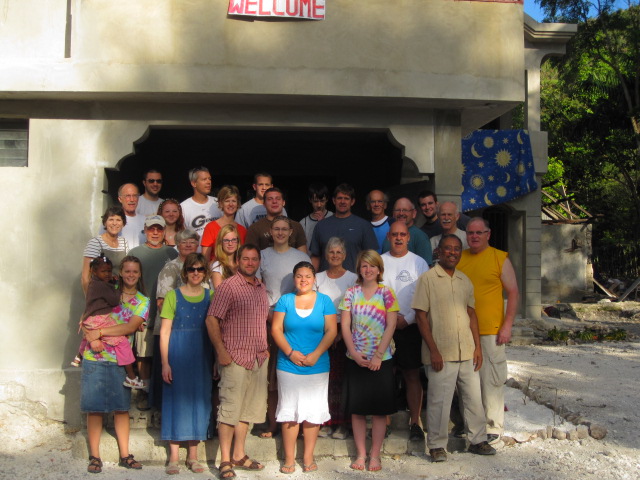
On January 9, 2010 my son and I left for southern Haiti, an outreach of Souderton Mennonite Church in Souderton, Pa.  My son, Jordan, needed to fulfill his senior high school experience at Christopher Dock Mennonite High School by being involved in a week of service or job shadowing. Jordan chose to work in Haiti with the Water for Life program located in Passe bois d’orme and the Tree of Life in La Baleine, Haiti.  I came along with 26 other persons from my church to try and bring hope and encouragement to the people of these two villages.

But we were not prepared for an earthquake that rattled our plans and introduced us to what it can be like to feel stuck in a foreign country on Tuesday, January 13th. We were at the beach in Passe bois d’orme when the first quake struck.  We happened to be rattling around in an extended jeep wagon with luggage and 15 persons aboard at the time.  The driver said that he heard a metal crack, thinking it was the axle that snapped but instead his wheel lug nuts had snapped off from the movement of the ground beneath us. Then a few minutes later as we reached our destination, the ground shook again and a woman and child came running out to escape walls moving and dishes falling. It was terrifying and everything revolted, waving branches, toppling towers, and people scattering in aimless directions. We gathered quickly in circles of prayer, praying for safety and protection from the elements.

We soon heard that a tsunami warning was issued for Port-au-Prince (about 50 miles away) and we hustled to escape to higher ground and the secluded mountains away from the coastline.  We couldn’t hurry enough on the rock grooved roads that permitted only one lane traffic. We fearfully watched the water for a response and tried to drive faster.  We needed to make a quick stop at the local mission house for extra clothes and stopped several times for picking up falling luggage, readjustment of the standing passengers on the back of the trucks, and an overheated engine that transferred more persons on the already overloaded 3 vehicles.

We finally got to the hills of La Baliene and decided it was safest to sleep outside on mattresses than risk the walls tumbling from the responding aftershocks. We slept under the open sky with our frightened Haitian neighbors that had gathered at our mission guesthouse.  Between babies crying and goats bleating, we didn’t sleep much, but we were glad to be safe and to still have food and shelter. The next day, when the dust cleared we heard about the airport being closed, the presidential palace being flattened, and the roads twisted and broken, landslides that shut down all traffic, and suddenly realized we might not be able to leave Haiti on our scheduled flight after a week.  We also heard of many casualties and ruined homes. The quakes had taken away homes that may have been poorly constructed and small, but they were homes that represented a growing self-confidence and emerging agricultural independence.  How could this happen to a country desperate to regain the hardworking coffee production and tourism of the past? I can testify to the fact that Haiti is filled with lush valleys and palm-lined coasts that could tempt any traveler.  So with so much potential for good, an earthquake is the last thing the Haitian people needed.

We came wanting to serve, but may leave not having achieved much at all. But we certainly were exposed to the hidden potential, unique possibilities, and warm hospitality of Haiti.

Also published at http://www.jdjeeps.com/index2.html

Birding Along the Susquehanna

Birding Along the Susquehanna
Written Spring of 2005

Did you ever try “birding”? Recently, on a beautiful spring Saturday, I packed a lunch and headed to Lancaster County to go birding.  My older brother Philip asked me to meander around the Susquehanna River in search of some birds on his “to see” list.  We hiked through nearby woods, but we also just sat, with nowhere to go and nowhere to be, waiting patiently for the next avian sighting.  Do you realize how spectacular a Baltimore oriole (often called the Eastern oriole) looks when the sun hits it? Its cousin, the Orchard oriole has a “show me” spirit as well.  But the high point of the day was watching a bald eagle feeding its young in a huge nest of branches high above us in an electricity tower.  It is exciting to see the return of the bald eagle to our region and we were even privileged enough to look through a fellow birdwatcher’s scope and see the yellow of the eagle’s eyes as it majestically surveyed all of us, turning its distinctive beak from side to side.  The bald eagle has an elegance and sophistication all its own.

But even more importantly, it meant a lot for me to be able to spend a day alone with my brother.  You see, I am the youngest of five and came along six years after my mother discarded all her baby clothes.  Philip is 12 years older than me and unfortunately I was only six when he left our home for 1-W service in Colorado.  I’ve known Philip all my life, but don’t remember ever being alone with him for any length of time.  So, it was kind of like getting to know an old friend in a more meaningful way.  It was worth the awkwardness that I think we both felt at first when we later realized how much we’d learned about each other.  That day of birding was a day of reconnecting with my brother and with the quiet and beauty all around us.  It was a special treat to find familiarity and common ground in the admiration of God’s gifts in nature.

Finding Joy and Purpose

Finding Joy and Purpose
Written Winter of 2004

I’m sitting here in first period Language Arts class at Indian Crest Junior High School.  All around me there are ninth grade students talking, trying to practice reading a Dr. Seuss book for their upcoming elementary school visit.  They seem glad to not have to concentrate  on vocabulary or Conrad Richter’s Light in the Forest.

All day long I’m around boisterous kids.  When I arrive home, my own children clamor for my attention during the evening news, competing with each other for assistance on their homework.  Sometimes I long for quiet.

But yesterday, I had my mother over to our house for supper.  She didn’t seem to notice two of my children firing questions, hopping on her lap, and pleading with her to choose which name, Heather or Trish, should belong to an unnamed doll.  Her patience never wavered.  She even seemed to enjoy it.

Mom later thanked me repeatedly for having her over for dinner.  She said it felt “good to eat with a family.”  Since my dad died in July, my mom has missed eating with someone.  But then, my dad’s loud, commanding, and entertaining voice would be easy to miss.  In the past few months, she has continued to tell us, “Merrill never gave me the silent treatment!”  I can clearly see that my dad’s absence has left a quiet, gaping hole in my mother’s life.

She made me realize as we grasped hands for a dinner prayer that quiet is nice, but having an active, vibrant family is priceless.  My mom helped me see myself in 30* years, longing for the days of noise and chaos, dirty feet and slobbery kisses, words of anger and words of love. It’s at times like these that I agree with Emily Webb from Thornton Wilder’s Our Town when she says, “Does any human being ever realize life while they live it?”

My prayer is that God will help you and me to find joy and purpose in this new year, no matter what our passage in life.–BBM

*Editorial note:  It took a lot less than 30 years to miss the noise and clamor of raising a family.  Try 7 or 8 years…

Beauty of Compliments

Beauty of Compliments
Written Spring of 2006

I heard on Oprah recently that if you want to improve your marriage, a good way is to tell your partner three things you appreciate about him or her every day.  This counselor said that he and his wife give each other three compliments, big or small, each night before they go to sleep. It could be as little as “I appreciated the way you cleared up the dishes tonight” or “I liked the color blue that you wore today.” This made me wonder how many other relationships could be improved if we focused more on the positive rather than the negative. Who knows, maybe even my relationship with my two teenage boys could improve with compliments.

I know that traditionally Mennonites have been more reticent and perhaps felt like complimenting others encouraged false pride, but I’m not sure that is biblically-based. In fact, it almost seems like Philippians 4:8 encourages such a positive, affirmative outlook on ourselves and others, when it says ” Whatever is true, whatever is noble, whatever is right, whatever is pure, whatever is lovely, whatever is admirable—if anything is excellent or praiseworthy—think about such things.” It’s just so much easier to think about negative characteristics of ourselves and others, isn’t it?

I think we all could use more compliments. Sincere compliments are preferable, but after some thought I realized that I may appreciate a compliment from my supervisor at work even if it wasn’t sincere. (I really have no objection to delusional thinking!) Hank Fox, a humorous freelance writer says, “The really weird thing about compliments is that they cost the giver not one red cent.  And yet they can be gold to the person getting them.  You’d think more people would make the very slight effort it takes to do it.  And yet it seems most people don’t.”

I don’t know about you, but sometimes I feel like I am fighting a daily battle of gratitude versus resentment. Henri Nouwen suggests, “Healing happens often by leading people to gratitude, for the world is full of resentment.” I believe that God encourages us by His love to continue to see the beauty and goodness in others…and perhaps three compliments a day is a good way to start!

Stories Passed Down

My great-grandfatther, Daniel Heebner, with one of his grandchildren.

Stories Passed Down from Generation to Generation
Written in Fall of 2003

When coming home from an evening program at Christopher Dock Mennonite High School, my dad would sometimes choose to cross the bridge on Cassell Road where my family believed the following events took place.  My dad (Merrill Benner) being very familiar with the story from my mother (Sara Heebner Benner) and her side of the family, would dramatically re-enact the events, complete with horse whinnies, screams, and the slitting noise of the penknife…all in our car, of course.  One time this got too intense for me and I dreamt about it that night.  But even after the childhood fears were gone, this sad story left an indelible impression on me.  My grandfather was Albert Heebner, father to Sara Heebner. This is a write-up from the time, believed to be written by Mrs Irvin (Eva) Kratz:

1898

Double Drowning Tragedy along the Skippack Creek

Shortly before noon on Sunday, May 15, there occurred a sad accident near the George Hartzel home when Daniel G. Heebner and family of four boys and one girl, Mary (the youngest child), and Allen, a son of Cyrus Clemmer of Hatfield, were on their way to visit Mrs. (Sallie) Heebner’s parents, Mr. and Mrs. Jacob S. Landes, a mile from the scene.

They started to cross the low plank bridge, which at the time was surrounded and covered with water to the depth of eighteen inches, due to a heavy rainfall on Sunday and the previous night. The height of the bridge was about four feet, and was often under water.  It had a railing on both sides, but the swollen stream had taken the right side railing with the tide.  The horse, a newly purchased animal, was leaning to the right near the edge of the bridge, and because of the waves on the left side, became frightened and unmanageable. He stepped down over the edge, dragging the wagon with him so that the one front wheel went down, too, plunging Mr. and Mrs. Heebner and the little girl headlong into the current.  Mr. Heebner caught hold of one wheel to save himself, grabbing around in the water for his wife and little girl, to no avail.  This was the last time the two persons were seen alive.  They were taken under the bridge with the stream.

Mr. Heebner stood wringing his hands when others came to rescue.  Horace, the oldest of the boys, quickly cut the cover of the back of the huckster wagon with his penknife, and with the help of the father, succeeded in wading across the water-covered bridge and walking to the home of the grandparents.  Jacob, the second oldest and eleven years of age, helped all but Albert, the five-year-old, from the water-filled vehicle.  Jacob dragged him to safety by one foot.  He had also grabbed Mary’s foot, he says, but being held too tightly by her Mother’s arm, she could not be saved.  Mary had been in the back seat chatting with her brothers during the journey, but within a short distance from the place of the accident, she became tired and begged to go sit on her Mother’s lap.  Mrs. Heebner is remembered to have responded, “Let Mary come up front.  She wants to see the water, too.”

After the accident, Mr. Heebner, a nearly frantic man, could not be persuaded to leave the site.  In the evening, at seven, when the rain receded, the search began for the bodies.  Mary was found, at nine PM. The search was kept up to a late hour, but the body of Mrs. Heebner was not found until Monday at one o’clock PM. The search had started early in the morning with boats and ropes spun across the stream.  Three hundred men were gathered.

Mrs. (Sara, referred to as Sallie Landes) Heebner’s age was 31 years, 6 months, 2 days.  Mary’s age was 2 years, 10 months, 27 days.  Burial was on Ascension Day, May 19, 1898 at the Plain Church (Plains Mennonite Church). Two thousand people witnessed and viewed the bodies.  The text of the funeral was Lamentations 1:12.

Let’s Laugh More

Let’s Laugh More
Written Winter of 2006

There is a “time to weep and a time to laugh” (Ecclesiastes 3:4) Let’s choose to laugh more and worry less in 2007!

If you’re like me it’s easy to feel “down in the dumps” during the gray, short days of winter. Vanessa, my 11-year old daughter, tells me (she heard it from a reliable source) I need to laugh every morning right after I get up.  Even if there is nothing funny, “you just make yourself laugh.” According to her, the whole day will go better if I laugh first. Well, I will attest to the fact that if my husband and I find something humorous in the early morning hours, the rest of the day does go immensely better.  But if we start ranting about money issues or why the dog has to track in mud, the day doesn’t go so well.

According to Mike Moore (2006 Self Improvement Online, Inc.) “laughter isn’t just fun, it’s good for us. Modern medicine is discovering more and more about the therapeutic dimension of humor and laughter and is encouraging us to add them to our wellness program. When we laugh we:

  • Alleviate depression
  • Lower our blood pressure
  • Promote relaxation
  • Reduce stress
  • Increase the oxygen level in our blood, giving us more energy
  • Increase the endorphin activity in our body resulting in a sense of well being
  • Are able to keep things in perspective
  • Banish boredom
  • Are more socially attractive – people enjoy being with those who laugh easily and often
  • Immeasurably increase our enjoyment of life

Laughter has been called social glue because it bonds us to the people we laugh with. The message is clear, to live better…laugh more. If it feels good to laugh then laugh to feel good.”