Surviving in Tough Economic Times

Surviving in Tough Economic Times
Written Winter of 2009

Today’s newspapers speak doom and gloom about the future of our US economy and many of us are facing difficult economic issues.  We wonder if we may lose our jobs or possibly our homes and fear for the future. If my dad (Merrill Benner) were still alive, he would tell me about the Great Depression and how this is nothing compared to what he had experienced.  In fact, recently I came across a glimpse into that time period from a story my dad had written in a grandparent’s memory book for my oldest son, Patrick.  My dad wanted his descendants to know what life was like during the Depression and how sometimes surviving included an abundance of ingenuity and thriftiness.

It was a cold, snowy Saturday morning during the Depression of the late 1920’s or early 1930’s, when the family of Charles and Leanna Benner, which consisted of Pop, Mom, Paul, Edwin, Marvin, Merrill, Irene, and Edna (later, Dorothy and Willard as well) experienced a rather unusual  occurrence.  We lived at 240 Chestnut Street and at the time, there was a two story barn near the family home.  We also owned the lot directly behind our property which was vacant and had on it a large pear tree.

During these Depression days, meat was a scarce item.  We ate lots of bean, potato, clam, and tomato soups. Many big families subsisted mainly on mush and milk, so we felt fortunate to have soup.  We sometimes raised leghorn hens, not for meat but to sell for much needed cash.  Pop and Mom felt the chickens were too expensive for us to eat, so during this time period we sold a flock of 35-50 hens for $1.oo each. 

On this particular day, hunting season was over (which was how we often supplemented our meager depression fare with rabbits, pheasants, and squirrels) and Pop decided to meet our need for good, fresh meat.  There was snow on the ground and the starlings were hungry and plentiful as they took a break on the pear tree in our back lot.  So Pop got his double-barreled shotgun and took careful aim from the upstairs barn window,  firing at least once into this flock of starlings perched on the big pear tree.  After the shot, Marvin, Paul and I helped gather the dead and wounded starlings.  We finished off the birds, which I remember tried to run away, but we caught them and filled up a peach basket full of starlings. Then we took them into the house, scalded them in a large tub, and picked the feathers off. They had nice meaty breasts and we each had one or more starlings for supper that evening. I think Mom cooked rice to eat with our birds, but more importantly, we were glad to have survived another cold wintry night and that our mom and pop and Father in heaven had supplied our needs. —BBM

Sunday Mornings as a Young Girl

Sunday Mornings as a Young Girl
Written Winter of 2011

I remember Sunday mornings as a child.  My dad was usually the time manager and tried desperately to get us all out in the car at “half-past” eight for a 9 o’clock service.  It started early in the morning by waking us up to the Mennonite Hour quartet blasted from our living room stereo. We often just grabbed an apple for breakfast and it sometimes seemed like a mad rush for all of us to get in the car, which would have included my older brother, Steve, and my sister, Linda.  But soon we were riding contentedly to church with many of us still munching on an apple.

My dad’s main goal in arriving early to church seemed to be to get a window seat on the left side of the sanctuary.  When we were successful, Daddy promptly put his Bible on the window sill and seemed to draw some unknown pleasure from this act.  Perhaps his father had done the same thing before him.  My dad used to say, “I held Beverly in church till I couldn’t see over her head.”  I guess I didn’t have any younger siblings to usurp my place on Daddy’s lap, so I continued till I was close to 13.  After all the lifesavers were used up (Mom didn’t let us chew gum in church because she said we “looked like cows chewing our cud”) and I still became “rutchy,” my dad would sometimes draw me a picture.  I’d like to say this picture was different each time he drew it, but actually it was the same picture with just moderate changes. He drew a tree stump in detail with wide roots and tree rings on the top.  He drew the surrounding area with distant trees and grass. I think I often added flowers to the scene.  But always in the center of the tree trunk was an ax and then the finishing touches were always the words, “Well done!”  At the time, I just enjoyed seeing a picture and thought my dad was an excellent artist, but I often was a bit perplexed as to the picture’s significance.  Why was the job well done and why the picture of a tree stump with an ax in it?  I think I asked him once and he replied with a smile and a nondescript answer “Well, it’s a job well done!” 

Looking back on it, I think it had something to do with looking towards heaven and a hope on my dad’s part that God would consider his work well done.  He loved being out in nature and it was something easy to draw that perhaps he had used in his chalk drawings that he had done in the 1950’s and 60’s.  It certainly was a picture that always rose to the surface when he sensed my boredom in church.  I don’t remember listening to the sermons in church because at that time I think the sermons felt way over my head.  But I suppose I did receive a message…. work hard and God will reward you.  I do hope my dad found the reward he strove for in heaven. -BBM

Daddy’s Grandfather Clock

Keeping Time
Written Winter 2008

One of my dad’s favorite songs to sing in the last years of his life was “Grandfather’s Clock” by Henry Work.  His signal to sing began with a beckoning to his grandchild to get the “yellow song book” from the piano bench. Then he took the child on his knee and with an earnest bass voice sang all 4 verses of the synchronous yet somewhat morbid ballad. Each grandchild especially loved the chorus:

But it stopped, short, never to go again, when the old man died.

Ninety years without slumbering, tick, tock, tick, tock,

His life seconds numbering, tick, tock, tick, tock,

It stopped, short, never to go again, when the old man died.

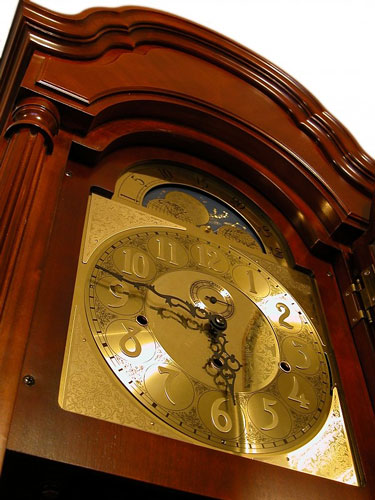
I never could figure out why he seemed so fascinated with this song since he had never sung it when I was growing up. Was it that the children loved the “tick, tock” or was it that one of his favorite earthly possessions was his grandfather’s clock that he built himself? It might have been both because between hearing Grandpop’s deep bass voice and hearing the clock chime just a few feet away, his grandchildren were usually spellbound.

When I was in high school Daddy built a grandfather’s clock from an Emperor Clock kit and he was never the same. He was proud of his accomplishment but there was something more, like he had a relationship with his clock. If the clock were losing time, Daddy could not rest until he resolved the problem. It was only in his later years that anyone besides Daddy fixed the clock. So, perhaps this song hit a familiar chord with Daddy and his clock. 

Now his grandfather’s clock chimes in our home, and Daddy would be pleased to know that it runs perfectly. It doesn’t seem to have the same omnipotent presence that it once had while residing at Halteman Road with my parents, but it always reminds me of my father. Sometimes I even apologize to Daddy when I’ve forgotten to wind it. Daddy had an intricate relationship with this clock, one that I can’t relate to, yet I always find the clock’s presence comforting and faithful. We all know “our hour of departure” will come, but as for now, let’s enjoy the precious moments God has given us. Happy New Year!  -BBM

For my uncle Paul

Paul Benner as deacon

Discovering my Uncle Paul and His Calling
Written Summer of 2011

When I attended my cousin Stanley Benner’s funeral this past March in Kitchener, Ontario, I wondered why I never thought about it before that I had Canadian Benner relatives.  His death was a tragic reminder of all that I did not know.

Apparently, my dad’s brother, Paul, grew up in the Charles and Leanna Benner family, married Margaret Longacre from Vincent Mennonite Church and attended Souderton Mennonite Church after they were married in 1932. But Paul seemed to feel the call to missions at a young age and they soon joined the mission church at Finland. He had caught the fervor of the young men called to minister to the people along “the Ridge.” In 1948, Paul, Margaret and the family of 7 moved to Spring City and began attending Pottstown mission church.  This was the same year that their oldest son Ernest died of leukemia. Despite this tragic blow to their family unit, Paul and Margaret stayed focused on the church and their outreach in Pottstown.  Paul’s dedicated leadership was appreciated because two years after they began attending at Pottstown Mennonite, he was ordained as deacon of the church by Bishop Amos Kolb and Paul Lederach.  He was the only one receiving votes for nomination.  In 1951, he also was elected as trustee for the Sprogel Burying Ground which would eventually be the site of the new church building. So it came as quite a surprise to Elmer Kolb and leaders of the congregation when in May 1967, Paul announced that they would be moving to British Columbia.  In the Pottstown church records, a month later, it states that Paul Benner “did not feel bad about the congregation but things in the conference.”  The record also states a belief among church leaders that “materialism [was] killing our fervor.”

Once settled in Topley Landing, BC, Paul and Margaret, along with their youngest daughter, Louise, began attending Decker Lake Mennonite Church, a congregation affiliated with the conservative conference, later known as the Eastern Pennsylvania Mennonite Church.  Global Mennonite Encyclopedia Online states that the “Eastern Pennsylvania Mennonite Church was formed in 1968 when a group of bishops, ministers, and deacons were granted a release from the Lancaster Mennonite Conference. Their purpose was to develop a church program that would help preserve biblical practice and the historic Mennonite values. The Eastern Pennsylvania Mennonite Church does not accept divorce and remarriage. Women wear head coverings and have uncut hair. Men, as a rule, do not enter the professions. They wear plain clothing (dress), and their life is built around the church, schools, and religious activities. They do not engage in worldly amusements, nor do they follow organized sports. The use of radio and television is not allowed.”

So, Uncle Paul and Aunt Margaret wanted to preserve some of the conservative values that they felt were disappearing in the Franconia Conference.  At the time, I was only 6 years old and totally oblivious that the Mennonite Church was changing or even that my uncle and aunt were moving to Canada.  I realized at some point that my uncle usually wore a plain suit and that my aunt wore a cape dress, but this was not that uncommon in those days.  As I got older, I knew that I should not be found in shorts or short skirts when “Paul’s” came to visit, but still did not realize the implications of all of this.  I remember my uncle Paul as a somewhat stern but gentle and patient man.  His quiet, unassuming voice was a stark contrast to my dad’s booming voice. But more importantly, my uncle was a devout Christian who chose to follow the path he felt God leading him and was a widely respected man of God.  That’s an amazing legacy to leave all of us in his family.  He didn’t hesitate to leave his siblings, parents and a more comfortable existence for the rugged life of the Northern Frontier to minister to a nearby Indian reservation. 

His life lives on in his children who primarily live and work in Canada.  Thus, I have Canadian Benner cousins that share the same smile, the same sense of humor and some of the same interests, but I am only now getting to know them.

Honduras with Patrick

Service Trip to Honduras
Written Summer of 2006

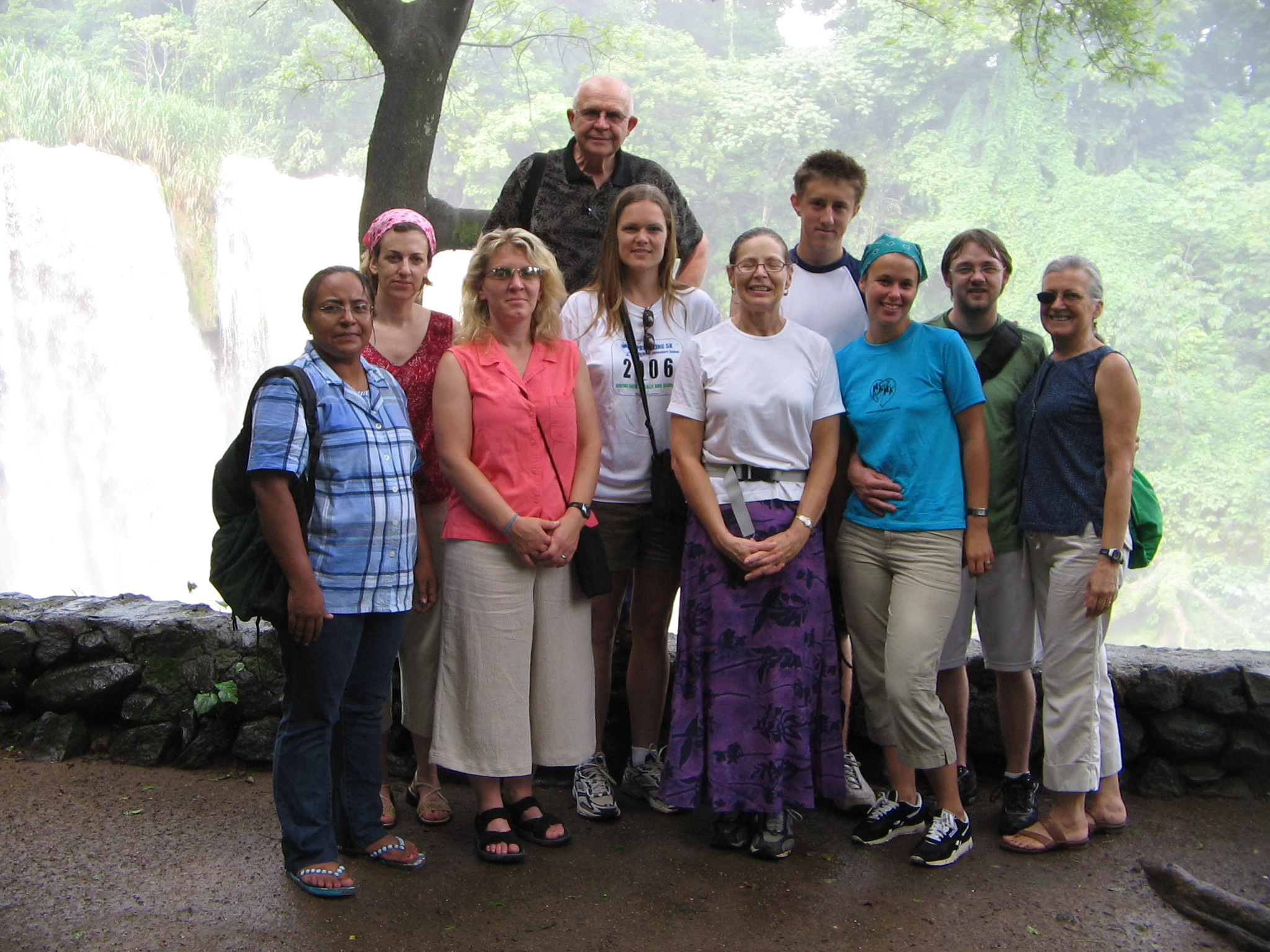
Early this year, my 17-year-old son, Patrick, decided that he wanted to go on a service project to San Pedro Sula, Honduras. I remember how excited he was, telling me he would help build a daycare center in Honduras’ second largest city. I was less than enamored by the prospect, but admired his sense of service and certainly didn’t want to discourage his humanitarian efforts. My husband, Ken, and I waited a few weeks to see if the idea would be fleeting, but whenever we mentioned it, Patrick would confidently say, “Yea, I’m going.” Finally, we stopped making plans for our trip out West and started to think about the realities of his decision. Would it be okay for him to go alone with the other MAMA team members from our church? And what if he got sick, as many of our church’s team members had on earlier service trips? Would others take care of him? And how would we pay for the airfare and expenses of such a trip? We told Patrick that if he was really serious about going, he would need to draft a letter asking family and friends for financial support for his endeavor. And he did.

Then a funny thing happened. Before I put too much thought into the decision (or the Spirit’s nudging, if you prefer), I found myself volunteering to accompany Patrick on the week-long service trip to Honduras. So, on July 15 of this year, Patrick and I flew to San Pedro Sula with eight other members of Ambler Mennonite Church. We struggled to remember the proper conjugation of Spanish verbs that teachers had drilled into us. We ate gourmet food, with every meal feeling like a savory feast prepared by knowledgeable Spanish cooks. We also experienced the polluted air, the energetic street vendors, and the vagabond boys of San Pedro Sula. Each morning we walked to the MAMA center, a few blocks from our hotel, to board a van for construction work and distribution of de-worming medicine in the village of El Progresso, but along the way we had to pass young boys, aged 10-to-18, living on the crowded streets, hoping against hope of providing an income for their families living in the village. It was a hard dose of reality for the 8 o’clock hour.

When we arrived in El Progresso, there was more reality. The school had not been started yet, and we needed to dig out the foundation walls before we could begin. This was the first day. On the second day, we learned what cement mixing is like in El Progresso. It meant using the street to mix 14 wheelbarrow loads of rocky sand with 4 bags of cement mix. Then we began the arduous process of hollowing out the center for water, filling it by bucketfuls from a neighbor’s cistern, and walking around the circle, gradually making the walls of the fortress higher.

At times the walls would spring a leak and then there would be a mad dash to blend the water and sand quickly. But on a good day, we gradually poured water from the center concave down the sides, till it all became a concrete mixture. By buckets this mixture was taken to the building site and poured by hand into the dug out dirt walls. Little by little we saw the foundation of the escuela emerge, till on the last day we put down the first two rows of cement blocks on the firm concrete foundation. It didn’t seem like we had accomplished much, but the community people were excited by the future prospects, and were so grateful for our efforts.

I’m still processing this trip to Honduras, but I know for sure that it was worthwhile—perhaps more for me than for the people of El Progresso. An extra benefit was watching my son interact with the Honduran kids, playing soccer at noontime when all of us were tired, and then later taking a leadership role among our team members. I had to wonder when he grew up and turned into such a terrific guy. It’s strange to see your son as a fellow team member with wisdom that you never noticed before. I felt like our roles were suddenly reversed, and he had more to teach me than I could ever teach him. That must have been the theme for the trip because I felt the same way about the Honduran people. Their graciousness and generosity, despite their lack of running water and adequate medical care, put all my “service efforts” to shame. So, I say thank you to the people of Honduras and the MAMA team in San Pedro Sula for teaching my son and I the true meaning of service and community. — BBM

Summer Road Trips

Summer Road Trips
Written Summer of 2007

Summer traveling brings memories of sitting in the back of our white Ford Torino, looking out between Mom and Dad’s head at the new and interesting sites.  My dad usually wore his heavy, dark-framed sun glasses with the pointed corners.  He always had a special lilt to his voice when we were traveling, like we were exploring new frontiers together.  He could even get more excited than us as children. When he took us up in an airplane for the first time, he was the only one shouting, “Beverly, we’re going to fly high above the clouds!”  My mom always had a voice to assuage any fears, assuring and gentle.  She often had a bag of tricks and treats on road trips for those times when I might get bored.  Daddy concentrated on driving while my mom played alphabet game and if all else failed, she brought out “celery candy,” which was celery cut in pieces rather than stalks.

Even now when I remember those times, I’m filled with an incredible feeling of security. All was well when we were on the road.  We left our troubles far behind and experienced new domains, talking and laughing raucously till it made our stomachs hurt.

Good summer time memories… that I still carry with me even though my dad is no longer around.  It’s fun to reminisce about the golden days of my childhood, but I can’t go back to those magical days any more than you can. Yet I believe God is patiently waiting for us, loving us, ready to laugh with us, ready to fill us with that same youthful wonder and anticipation. He not only loves us but is excited about all that we do and participate in. I can only imagine how wonderful heaven will be—like one unending road trip.

Iowa Roots Run Deep

Iowa Roots Run Deep
Written Summer of 2010

As another one of my sons prepares to leave the nest, I again grow weepy about his life so far and whether we taught him the things that we should have.   If I reflect back on Jordan’s life, I remember a delightful, funny, engaging toddler with an attentive smile for everyone.   He was never quick to talk, but when he did, his words carried weight.

Jordan most closely resembles my husband’s father in appearance and in demeanor.  They both have a slender build with a short stature; both slow to speak but full of wit.  They’re deep thinkers and rarely take offense. And just like Grandpa, Jordan loves golf and a good debate.

But some of the likenesses end there since Jordan’s grandfather grew up in Kokomo, Indiana as a part of the Old Order Amish church.  Since Grandpa was the oldest son, he had a lot of responsibility as the oldest to keep his brothers in line and do his share of the farm work. He enjoyed school but had to quit school after 8th grade to help out on the farm.  When Grandpa was 12, his family moved to Kalona, Iowa and a few years later, left the Amish church for the Conservative Mennonite Conference.

Jordan, on the other hand, grew up in Harleysville, Pennsylvania, far from the Midwestern corn fields. He went to a Mennonite church all of his life, but rules and regulations were probably not stressed as much as in the Amish church.  Jordan is the middle child and grew up akin to compromise and smoothing out differences.  He thrived in school, although perhaps not as motivated as he might have liked.

When Grandpa died last year, he left a legacy of honesty and integrity, frugalness and loyalty.  Jordan and Grandpa grew up so differently and in two different parts of the country, yet I’ve learned that character comes from within and it seems as if it can be born into a person.  Jordan loves the Midwest and feels most at home in the open countryside, golfing the quiet holes of Kalona, Iowa.  And just like his grandpa, he is frugal to a fault, never wanting to buy new clothes even when it’s obvious he needs them.  He is someone that does not spread gossip and can be entrusted with secrets aplenty.  These are things that I doubt I taught him, but that he was blessed with.  Best wishes, Jordan…may you make your grandpa proud.  -BBM

Daddy in the Fall

Fall’s Marvelous Craftsmanship
Written Fall of 2006

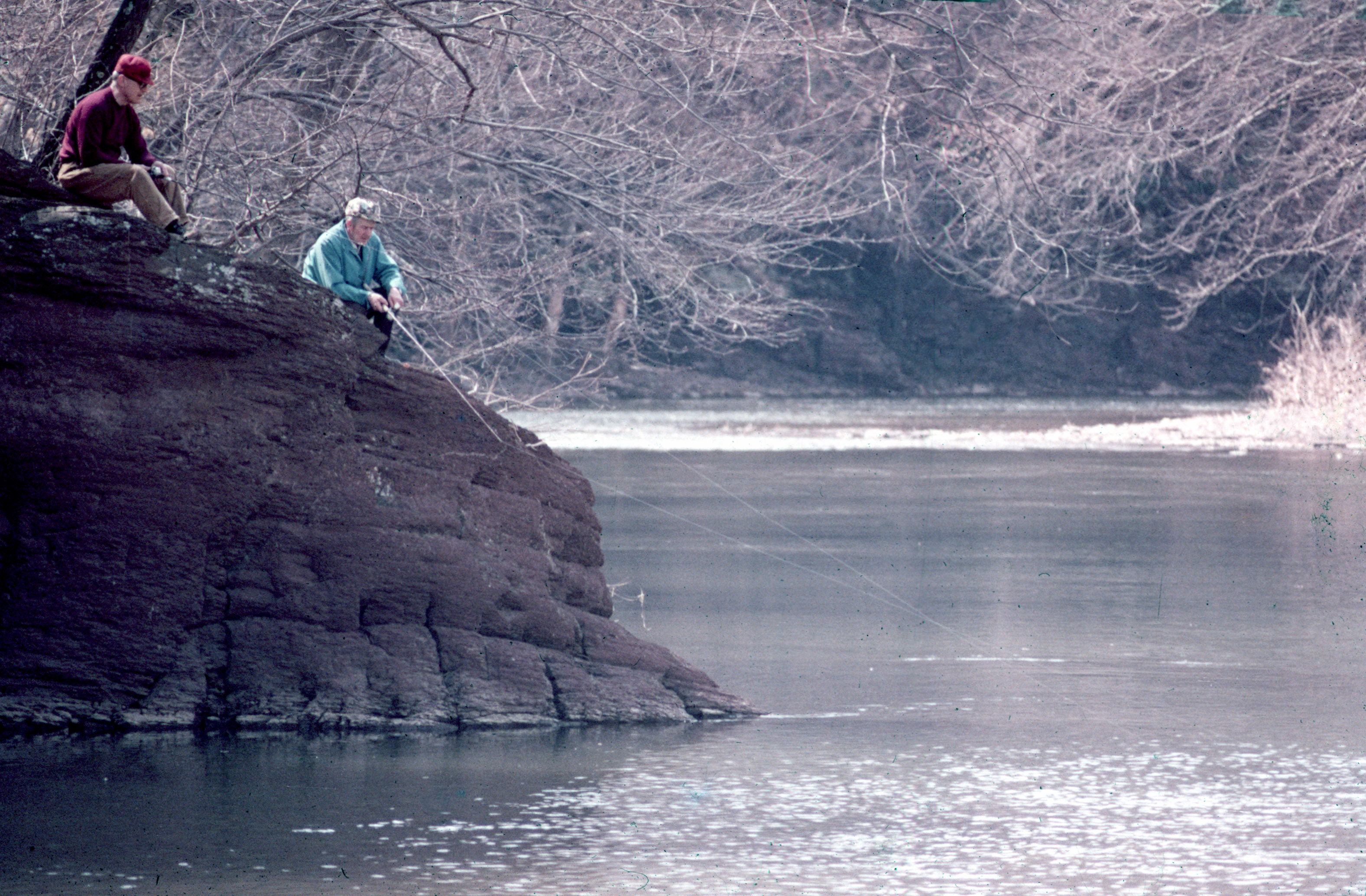
My dad loved the fall. Somehow, no matter how old I get, when the air starts smelling of burnt leaves and evergreens, I can’t help but remember my dad. I see my dad in gleeful anticipation of the upcoming deer hunt, enjoying every moment of meticulous preparation and hopeful expectation. And I remember Saturday mornings when he allowed me to experience the beauty of the hunt.

Since I was the youngest and the only child at home by age 12, I sometimes felt like my parents played tug-of-war with my time on a Saturday morning. Mom wanted me to dust and vacuum the living room and dining room, while Daddy needed me as a hunting companion, stomping through the fields to chase out pheasants and walking around the perimeter of the woods to rustle up inquisitive squirrels. On the days that I actually did accompany my dad, I remember the crispness of the air, how hard it was to keep up with my dad’s long stride, and above all, the quiet and peace of the woods. Being in the woods with Daddy was all about quiet expectation. Although a very talkative young girl, I quickly learned that Daddy expected complete silence and unless he specified otherwise, no movement whatsoever. But I began to find comfort and encouragement in the quiet, tranquil setting of the forest, listening to the voice of nature, the voice of an amazing Creator. And He faithfully spoke words of calm and steadfastness as the colorful leaves blew in the breeze, the honking geese flew overhead, and the bright sun danced with the shade.

I still stand in awe of the beauty of fall, remembering my dad and his innate ability to show me what an extraordinary world we live in.

Benner women

Honoring the Living
Written Spring 2009

I’ve always been fascinated with graveyards.  When I was young I spent a lot of my spare time in the Franconia Mennonite Church graveyard.  From the time I was 6, I lived on the nearby Halteman Road, so my neighbor Lori and I would often ride bike to “the church,” drink from the cold, satisfying water at the hand pump, and then go play in the back portion of the property.  We first sat in the enclosed basement entrance on the cement and played clapping games like “When Billy was one, he learned to suck his thumb” and then later we walked around the tombstones, looking at the old brown ones with illegible letters  and the newer ones with pictures of young children.

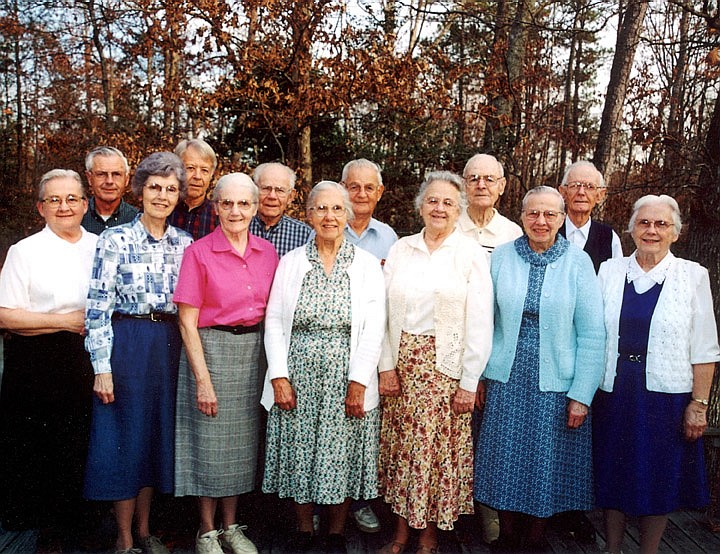
But recently, I realized at a gathering of my aunts and cousins that death is something to be honored while we’re still alive.  My cousins Mary and Lois began our time with an explanation of why we were gathered together –in honor of their mother and our aunt, Edna Styer.  It had begun as a belated birthday celebration, but as Edna made decisions about her health, it also had become a time to pay tribute to Edna’s life among us. As we ate soup and salads, my aunts, Dorothy, Irene, and Edna entertained us with stories of life at 240 Chestnut Street with Grammy and Grandpop Benner.  We discussed recipes and traditions but also past failures were mentioned and even the Rapture.  We sang songs that were Edna’s favorites.  While I listened to my aunts’ strong alto voices, I remembered Lois’ words about the funerals of Uncle Merrill, Uncle Marvin, and Aunt Kathryn that made her realize how nice it would be for the person to hear their tributes before they died.  So we took some time to tell Edna how much she had blessed our lives…

In the memories shared, we celebrated our lives together and our heritage as Benner women.  Lois even called us the “Sisterhood of the Benner women.” Of course we as cousins were sad at times to think we might lose some of the sisterhood charter members, our aunts, but we chose to dispel the fears with prayers and words of encouragement –a hope for the future. Graveyards will probably always hold their fascination, but I’ve been blessed with a new way to honor my predecessors. –BBM

Sunday Afternoon Drives

Sunday Afternoon Drives
Written Fall 2010

What ever happened to the Sunday afternoon drive? As a young girl, I recall my dad saying after the beef roast, after the dishes, and after an afternoon nap, “Let’s go for a ride!” Mom always looked excited at the unknown adventure that lie ahead and quickly reminded me to take my sweater.  So the two of us made a habit of grabbing our cable knit sweaters, mine just a smaller version of Mom’s.  We never knew where Daddy was going to drive, although his vehicles always seemed fond of “the Ridge” and the Morwood area.  Daddy liked to scout out game for his fall hunting and loved seeing the open countryside.

It often seemed like we ended up at someone’s house for a visit, but we never planned or called ahead.  Daddy would just say, “Let’s see who is home and maybe if they’re home we’ll stop in for a visit.”  If they weren’t home, we usually got out and did an obligatory walk around their garden, checking out their beans or their corn to see if they “had come up” better than ours.

Wellington Cassel’s, Harvey Freed’s, Bill Meyers’s or Uncle Marvin’s were all possibilities. But for some reason, I remember most vividly stopping in on Paul and Betty Clemmer. They were always gracious and invited us in as if they were expecting our visit.

Mom and Daddy would settle in the living room after a walk around the outside of the Clemmer homestead.  Daddy and Paul were usually laughing their way through a greeting while Mom and Betty were issuing warm words of encouragement.  Paul and Daddy had traveled together as young men and loved to recount a fabled trip to Eastern Mennonite School when the car was stricken with vapor lock.  Paul loved to hear Daddy recount deer hunting stories from the Benner men’s escapades in Tioga County and Paul in turn would tell a peculiar story or two that ended up sounding more like a joke than a story.  They seemed to feed off of each other’s zest for life.

Betty never forgot about the fact that no other children were around and would bring out a box of games and toys that I might enjoy.  I always appreciated her thoughtfulness.  I also looked forward to her bringing around a tray of refreshments after an hour or two. First, were the drinks and then the tray of snacks. For some reason their food and drinks always tasted so much better than what we had at home.  They seemed to have the latest crackers or snacks that my mom would never buy.

I also remember going for outings with Paul and Betty like a picnic supper to Audubon or Valley Forge to see the dogwoods.  Betty and Paul not only enjoyed my parents but would engage me in conversations, wanting to hear about school or things that interested me.  At times, Betty would also bring along extra bread for me to feed the geese or ducks along the way.

I have fond memories of these Sunday afternoon traditions and wish we still went out for relaxing, aimless drives around the countryside.  These times instilled in me the joy in the spontaneity of life and the thrill in finding friends along the way to share it with.